Why Is Online Reputation Critical for Brand Valuation?

Why Is Online Reputation Critical for Brand Valuation?

In days gone by, a brand’s value was measured by its revenues, market share and tangible assets, but these are no longer adequate indicators of a brand’s true value without a mention of its online presence. Digital brand reputation influences customer confidence, investor confidence and employee loyalty, and all of these go into the analytics and calculations of a brand’s reputation value from the perspective of analysts and acquirers. Even for junior and mid-level marketing, communications or finance professionals, knowing this linkage is no longer a luxury, as it can now take a company’s value for better or worse in hours, instead of weeks or months. The article examines why online reputation is now part of brand value, the reputation risk management measures that can be implemented to safeguard this value and practical steps that anyone can take to help develop and defend an online reputation in the face of an environment that can change in an instant. 
Why Is Online Reputation Critical for Brand Valuation?

What Is Digital Brand Reputation and Why Does It Affect Brand Valuation?

Digital brand reputation is the perception a business has in search engine pages, review websites, social media, news articles and other employer review websites. Digital reputation is not just about word-of-mouth, press citations or advertising, as in more traditional reputation management, but is happening more often, often without the company having much control over it, and to a larger degree by customers, employees, journalists and even competitors. It’s a significant shift from what reputation was like 15 years ago, when businesses could more easily influence the channels they were placed in and the speed at which criticism was spread. An unanswered customer complaint on a public forum can now be read by thousands of potential customers within hours, which can be devastating to the brand. But a resolved complaint can be just as quickly a positive indicator that builds trust with thousands of potential customers. This unchanging flow of commentary allows reputation to no longer be a product of a well-crafted press release, but instead a company’s asset that needs to be monitored and managed. It also means that it is no longer only people who are inside the organization that generate reputation – it can be former employees, competitors, automated reputation-scraping tools, and anyone else.

The change is particularly significant for brand reputation valuation, as saying goodbye to the days of financial analysts valuing a brand’s reputation based on soft qualitative data is a step that has been taken by private equity stakeholders and acquiring companies. The traditional brand value models are more typically based on revenue premium, customer retention, and potential to license, but very often sentiment analysis, review scores, and trends in social media engagement are used as leading indicators of future brand value and can be used as an early warning tool for shifts in customer behaviour that haven’t yet been reflected in quarterly results. A brand that performs well on social media will have more leverage in terms of price, lower customer acquisition costs, and a more robust business in a downturn that will lead to a higher valuation multiple. But when a brand’s reputation is visibly tarnished, it can usually be seen as undervalued for the same brand, even though financial performance may be good, since analysts will expect a loss of trust to trickle down to future revenues. This is one of the more important changes in the approach valuation professionals have taken to intangibles, as it involves predicting the financial impacts of intangibles, namely the public mood and opinion, which is so hard to calculate that it is no longer suitable to be treated as a mere qualitative consideration in a risk section of a valuation report. 

How Does Reputation Risk Management Protect Brand Reputation Valuation?

Reputation risk management is the field of study that can involve identifying, tracking and reducing risks to a company’s reputation that can lead to financial loss before they become a problem. The function is now much more than public relations; it is usually the responsibility of multiple points of contact across a company’s departments, often including the data security team, as a breach of reputation can come from anywhere. Reputation risk management begins with ongoing tracking of online mentions, review trends and social sentiment and a defined escalation protocol to prevent a small issue from turning into a long crisis by being left unchecked for too long. This monitoring function is now often delegated to a team or to a cross-functional team on a rotating basis, for good reason: Reputational risk does not respect departmental lines, and a marketing-only approach can never detect operational or legal warning signs until they become public. Reputation monitoring is best done when it uses operational data from your product or service, as well as external data from sentiment tracking, and not just social media, or only one or the other.

There are various kinds of reputational triggers, each with different degrees of impact on brand reputation valuation, and understanding the pattern of such triggers enables the brand valuation professionals to focus on where to invest resources for monitoring and responding. The table below provides a practical example of four types of triggers, their locations and the type of valuation impact they are likely to have, to help teams create their initial reputation monitoring framework. However, newer practitioners may find it helpful to align incidents that have occurred in their own organisation in recent years with this framework, as it will soon identify which type of risk their organisation is least likely to be able to detect. 

Table 1: Reputation Risk Management Triggers and Brand Reputation Valuation Impact
Risk Trigger Typical Source Valuation Impact
Negative review clusters Review platforms, app stores, comparison sites Erodes customer trust premium
Viral social media backlash Social platforms, influencer commentary Sudden brand equity decline
Data breach or privacy failure Cybersecurity incidents, regulatory disclosures Long-term trust and loyalty loss
Executive misconduct News coverage, whistleblower reports Governance discount on valuation

It’s most evident in times of stress. Companies that have a more mature reputation risk management process recover in a quicker timeframe after an incident because they have pre-defined response processes, designated spokespeople, and a history of being transparent with constituents in the event of an incident, so they can get straight to the resolution without having to waste valuable early hours debating who can speak publicly. A company that fails to have these processes in place could exacerbate a beginning reputation incident by not being swift, consistent, or reactive with the public in the aftermath, thereby prolonging the negative sentiment and driving a valuation penalty in the end. If you are a professional who wants to pursue a career in this field, it is now widely recognised that reputation risk management is not just a communications capability but an integral part of the business. Note that the categories of triggers in the table are not mutually exclusive – for example, a data breach will often be accompanied by viral social media comments, so a sophisticated reputation risk management operation should look for multiple impacts instead of each type of risk in isolation. 

What Are Five Key Steps to Strengthen Digital Brand Reputation?

They can take a proactive approach instead of a reactive one when a crisis has started to emerge by following a structured approach to safeguarding a company’s online reputation. The five steps outlined below are usually a sequence taken by communications and brand teams to take a reputation from being passive to measurable.

First, set up a permanent monitoring program on review sites, social media and search results – and address any negative pattern early, as much damage control is more expensive and takes longer after a story has gone viral. Second, ensure that a clear escalation plan is in place which specifies who is notified, who is not notified, and when and under what conditions the problem moves to senior leadership – ensuring that the response does not rely on the first person to notice the problem. Third, don’t just talk the talk, do the walk: If an underlying issue has been identified, a company with integrity would invest in fixing it, but it’s clear that customers and observers can usually tell the difference between a company that publicly apologises but privately practices the same thing, and one that publicly apologises and does the work. Fourth, educate representatives of the public and customer-facing employees with uniform and clear communication protocols – miscommunication and confusion during a crisis only degrade trust even more than the event itself. Fifth, take regular measures of reputation performance over time in terms of a consistent set of indicators, including sentiment trends, review scores and share of voice in comparison to competitors, to enable progress to be tracked using the same degree of rigour as other business metrics, rather than anecdotal evidence. One of the most frequent errors of newer reputation professionals is not measuring the outcome: if it isn’t measured, it is hard to present to leadership that reputation investments are showing a return. A good program generally repeats all five steps periodically—even though the monitoring tools, contacts to escalate to and even the platforms on which reputations are developed change more quickly than the majority of internal policies can. 

What Real-World Examples Show About Online Reputation and Brand Valuation?

For instance, a major international airline saw a video of a passenger who was forcibly removed from a full plane go viral. The video saw millions of views within hours of posting, and the video’s first public statement was not apologetic, but rather defensive, adding fuel to the fire. Later, the story was picked up and used repeatedly in other articles regarding better customer service in the airline industry, but by then it had become an international news story. The price of the airline’s stock plummeted in the days after the matter, and analysts particularly highlighted its damage to the airline’s brand reputation as opposed to its business fundamentals as the root cause of the declines, showing how quickly digital brand reputation can become a tangible financial loss when the business fundamentals stay the same. Later reviews by communications experts of the episode identified the defensive and delayed tone of the initial statement, which did much to prolong the crisis, particularly the media attention and financial impact.

An opposite case, for example, was a medium-sized outdoor clothing manufacturer that found a manufacturing flaw that impacted a very small portion of its product. The company was more proactive in announcing the defect, even though it didn’t come to light until customers complained or media reports appeared, by guaranteeing replacements for affected devices, informing customers of ongoing updates, defining its own solution timeline, and taking the stance that this was an opportunity to make a statement about its accountability, not its liability. The trade media coverage was marked by a high level of positivity, highlighting the company’s transparency as a good example for effective reputation risk management, while sentiment data indicated that little damage was done to the company’s brand in the long-term. The case is a reminder of another important principle in brand reputation valuation: the brand’s response to a challenging issue can have a greater impact on its long-term brand value than the severity of the initial issue. Internal reviews since then gave the company credit for its existing escalation and monitoring process, which had been in place for years prior to discovery of the defect and allowed leadership to agree to a proactive disclosure in days instead of weeks that it would have taken to get through internal sign-off. 

What Are the Benefits and Challenges of Reputation Risk Management?

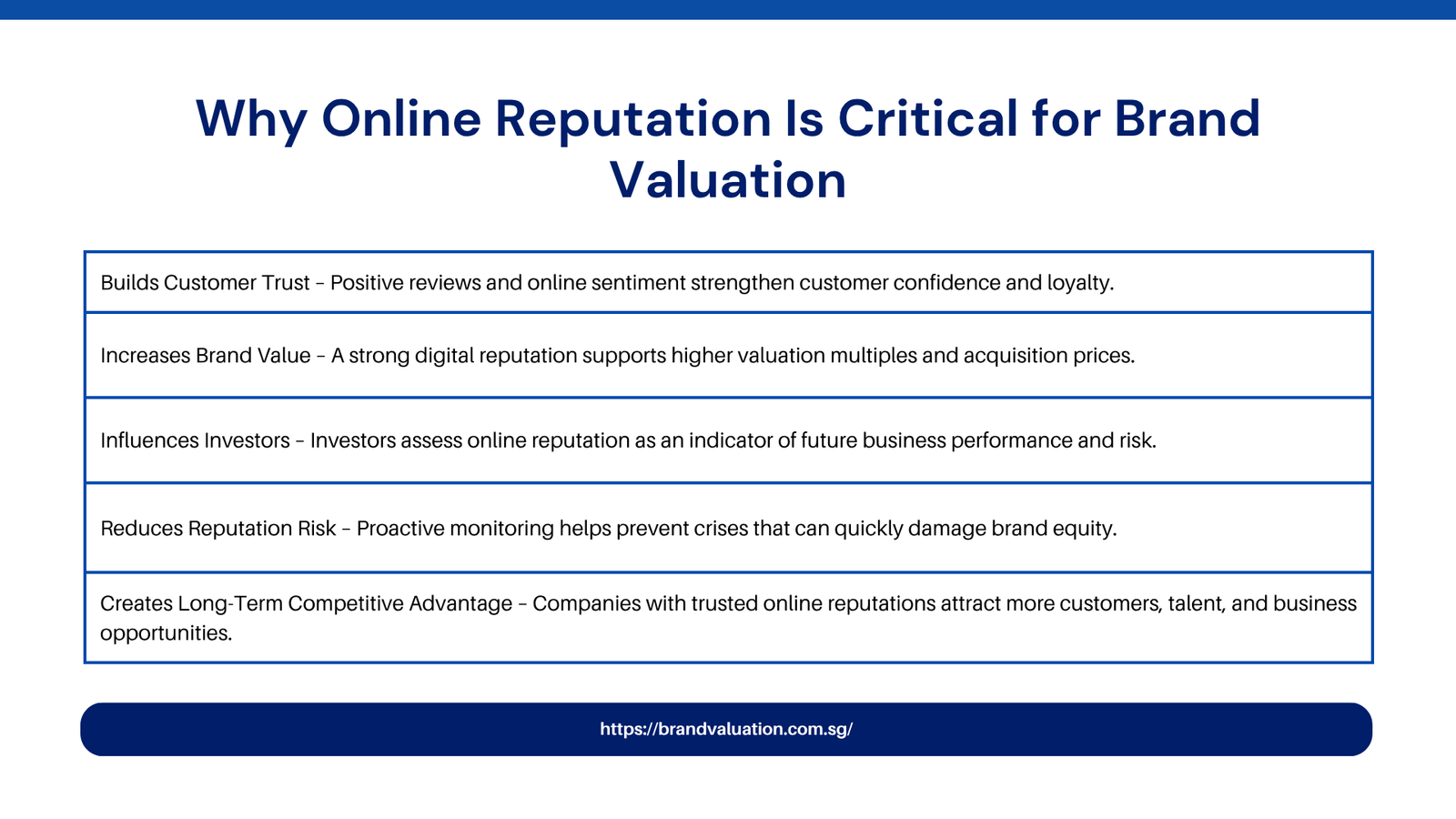
Effective reputation risk management is more than just preventing bad news in the press. A company with a strong digital brand reputation is likely to have more loyal customers because when customers see something they don’t like one time, they are more likely to overlook it if they have been exposed to the company’s brand before, and it hasn’t been negative. Investor confidence also gains as institutional investors incorporate reputational risk into their assessment of a company’s long-term stability, especially for companies with a greater reliance on brand equity, such as those with consumer-facing businesses where brand equity is a major contributor to enterprise value. Rep and HR/employer branding also become interconnected, as job seekers have begun researching a company’s online reputation, typically by visiting employer review sites before accepting a job offer, and their desire to know more about a business’s reputation is becoming more common practice. The bond with partner and vendor relations is also solidified because other firms are not keen on being linked with a partner who has an unaddressed bad reputation. Even at the biggest corporate buyers, sometimes there’s a simple “reputational screening” step in the procurement process, which can simply rule a company out of business opportunities without a direct conversation on the topic.

The obstacles are great, however. The volume of online commentary that can be seen, heard, and read across sites, languages, and regions can easily overwhelm highly-empowered communications teams, and determining which talking points are truly important and which are just “chatter” demands experience and solid monitoring capabilities. Another recurring issue is how quickly you can respond, and while social media can have the power to spread a story more rapidly than most organisations’ approvals and filters can keep up with, there has to be a balance as well – between speed and comprehensive, factually accurate and legally protected messaging, which larger companies often value above all else. There is also the danger of overcorrecting: spending more on the messaging than on the original problem that is the root of the criticism, which leads to only a short-term positive shift in sentiment and then to a return of the original problem. The measurement of ROI in reputation investment is even more challenging, because, unlike a marketing initiative that has a specific sales result, it’s difficult to point out to a sceptical money-chaser the financial value of avoiding the loss of reputation. Cross-border operations present an additional challenge because there are often significant differences between the regions in how each views transparency and the tone of response that is considered acceptable – a global communications playbook that is effective in one area may not be as effective in another. 

Conclusion

But Digital brand reputation has gone from being a communications issue on the sidelines to a fundamental element of brand reputation valuation, and those companies that take it seriously will recover more quickly from disasters and enjoy higher long-term valuations. The practical lesson to take away for professionals developing a career in this area is that reputation risk management should be an ongoing operational process, not a reactive response or operation that relies on occasional fire-hose moments, ambiguous escalation processes, and salvaging the situation. By learning this art at a young age and realising its real-world applications and impact in both marketing and communications and finance, early career professionals will be able to bring real, measurable value to their work. The more stakeholders are able to access independent information on company behaviour, the more their actions will differ from what they say, and companies that care about their reputation will find it more difficult to cover up the discrepancies. It cannot simply be a communication strategy, but a true competitive advantage, and as more people get access to honest, independent information about how companies actually behave, the gap between the two will only grow harder to conceal. A sign of future success is not always the ability to use the latest monitoring software, but rather the ability to know when to act quickly and when to wait and assess a small isolated problem and respond accordingly. 

Frequently Asked Questions

Q1. Why is online reputation critical for brand valuation?

Online reputation reflects how customers, investors, and stakeholders perceive a business. A strong digital reputation builds trust, supports customer loyalty, and contributes to higher brand value, while negative online sentiment can reduce valuation.

Investors consider online reviews, media coverage, and public sentiment when assessing a company’s long-term potential. Businesses with positive online reputations are generally viewed as lower-risk and more attractive investment opportunities.

Negative customer reviews, social media controversies, cybersecurity incidents, executive misconduct, poor customer service, and ineffective crisis communication are among the most common factors that can harm a company’s online reputation.

Businesses can protect their online reputation by monitoring customer feedback, responding promptly to concerns, maintaining transparent communication, resolving issues quickly, and implementing a structured reputation risk management strategy.

Yes. Effective reputation risk management helps preserve customer trust, minimizes the financial impact of crises, strengthens brand equity, and supports sustainable long-term brand valuation.

Why Is Online Reputation Critical for Brand Valuation?

In days gone by, a brand’s value was measured by its revenues, market share and tangible assets, but these are no longer adequate indicators of a brand’s true value without a mention of its online presence. Digital brand reputation influences customer confidence, investor confidence and employee loyalty, and all of these go into the analytics and calculations of a brand’s reputation value from the perspective of analysts and acquirers. Even for junior and mid-level marketing, communications or finance professionals, knowing this linkage is no longer a luxury, as it can now take a company’s value for better or worse in hours, instead of weeks or months. The article examines why online reputation is now part of brand value, the reputation risk management measures that can be implemented to safeguard this value and practical steps that anyone can take to help develop and defend an online reputation in the face of an environment that can change in an instant. 

Why Is Online Reputation Critical for Brand Valuation?

What Is Digital Brand Reputation and Why Does It Affect Brand Valuation?

Digital brand reputation is the perception a business has in search engine pages, review websites, social media, news articles and other employer review websites. Digital reputation is not just about word-of-mouth, press citations or advertising, as in more traditional reputation management, but is happening more often, often without the company having much control over it, and to a larger degree by customers, employees, journalists and even competitors. It’s a significant shift from what reputation was like 15 years ago, when businesses could more easily influence the channels they were placed in and the speed at which criticism was spread. An unanswered customer complaint on a public forum can now be read by thousands of potential customers within hours, which can be devastating to the brand. But a resolved complaint can be just as quickly a positive indicator that builds trust with thousands of potential customers. This unchanging flow of commentary allows reputation to no longer be a product of a well-crafted press release, but instead a company’s asset that needs to be monitored and managed. It also means that it is no longer only people who are inside the organization that generate reputation – it can be former employees, competitors, automated reputation-scraping tools, and anyone else.

The change is particularly significant for brand reputation valuation, as saying goodbye to the days of financial analysts valuing a brand’s reputation based on soft qualitative data is a step that has been taken by private equity stakeholders and acquiring companies. The traditional brand value models are more typically based on revenue premium, customer retention, and potential to license, but very often sentiment analysis, review scores, and trends in social media engagement are used as leading indicators of future brand value and can be used as an early warning tool for shifts in customer behaviour that haven’t yet been reflected in quarterly results. A brand that performs well on social media will have more leverage in terms of price, lower customer acquisition costs, and a more robust business in a downturn that will lead to a higher valuation multiple. But when a brand’s reputation is visibly tarnished, it can usually be seen as undervalued for the same brand, even though financial performance may be good, since analysts will expect a loss of trust to trickle down to future revenues. This is one of the more important changes in the approach valuation professionals have taken to intangibles, as it involves predicting the financial impacts of intangibles, namely the public mood and opinion, which is so hard to calculate that it is no longer suitable to be treated as a mere qualitative consideration in a risk section of a valuation report. 

How Does Reputation Risk Management Protect Brand Reputation Valuation?

Reputation risk management is the field of study that can involve identifying, tracking and reducing risks to a company’s reputation that can lead to financial loss before they become a problem. The function is now much more than public relations; it is usually the responsibility of multiple points of contact across a company’s departments, often including the data security team, as a breach of reputation can come from anywhere. Reputation risk management begins with ongoing tracking of online mentions, review trends and social sentiment and a defined escalation protocol to prevent a small issue from turning into a long crisis by being left unchecked for too long. This monitoring function is now often delegated to a team or to a cross-functional team on a rotating basis, for good reason: Reputational risk does not respect departmental lines, and a marketing-only approach can never detect operational or legal warning signs until they become public. Reputation monitoring is best done when it uses operational data from your product or service, as well as external data from sentiment tracking, and not just social media, or only one or the other.

There are various kinds of reputational triggers, each with different degrees of impact on brand reputation valuation, and understanding the pattern of such triggers enables the brand valuation professionals to focus on where to invest resources for monitoring and responding. The table below provides a practical example of four types of triggers, their locations and the type of valuation impact they are likely to have, to help teams create their initial reputation monitoring framework. However, newer practitioners may find it helpful to align incidents that have occurred in their own organisation in recent years with this framework, as it will soon identify which type of risk their organisation is least likely to be able to detect. 

Table 1: Reputation Risk Management Triggers and Brand Reputation Valuation Impact
Risk Trigger Typical Source Valuation Impact
Negative review clusters Review platforms, app stores, comparison sites Erodes customer trust premium
Viral social media backlash Social platforms, influencer commentary Sudden brand equity decline
Data breach or privacy failure Cybersecurity incidents, regulatory disclosures Long-term trust and loyalty loss
Executive misconduct News coverage, whistleblower reports Governance discount on valuation

It’s most evident in times of stress. Companies that have a more mature reputation risk management process recover in a quicker timeframe after an incident because they have pre-defined response processes, designated spokespeople, and a history of being transparent with constituents in the event of an incident, so they can get straight to the resolution without having to waste valuable early hours debating who can speak publicly. A company that fails to have these processes in place could exacerbate a beginning reputation incident by not being swift, consistent, or reactive with the public in the aftermath, thereby prolonging the negative sentiment and driving a valuation penalty in the end. If you are a professional who wants to pursue a career in this field, it is now widely recognised that reputation risk management is not just a communications capability but an integral part of the business. Note that the categories of triggers in the table are not mutually exclusive – for example, a data breach will often be accompanied by viral social media comments, so a sophisticated reputation risk management operation should look for multiple impacts instead of each type of risk in isolation. 

What Are Five Key Steps to Strengthen Digital Brand Reputation?

They can take a proactive approach instead of a reactive one when a crisis has started to emerge by following a structured approach to safeguarding a company’s online reputation. The five steps outlined below are usually a sequence taken by communications and brand teams to take a reputation from being passive to measurable.

First, set up a permanent monitoring program on review sites, social media and search results – and address any negative pattern early, as much damage control is more expensive and takes longer after a story has gone viral. Second, ensure that a clear escalation plan is in place which specifies who is notified, who is not notified, and when and under what conditions the problem moves to senior leadership – ensuring that the response does not rely on the first person to notice the problem. Third, don’t just talk the talk, do the walk: If an underlying issue has been identified, a company with integrity would invest in fixing it, but it’s clear that customers and observers can usually tell the difference between a company that publicly apologises but privately practices the same thing, and one that publicly apologises and does the work. Fourth, educate representatives of the public and customer-facing employees with uniform and clear communication protocols – miscommunication and confusion during a crisis only degrade trust even more than the event itself. Fifth, take regular measures of reputation performance over time in terms of a consistent set of indicators, including sentiment trends, review scores and share of voice in comparison to competitors, to enable progress to be tracked using the same degree of rigour as other business metrics, rather than anecdotal evidence. One of the most frequent errors of newer reputation professionals is not measuring the outcome: if it isn’t measured, it is hard to present to leadership that reputation investments are showing a return. A good program generally repeats all five steps periodically—even though the monitoring tools, contacts to escalate to and even the platforms on which reputations are developed change more quickly than the majority of internal policies can. 

What Real-World Examples Show About Online Reputation and Brand Valuation?

For instance, a major international airline saw a video of a passenger who was forcibly removed from a full plane go viral. The video saw millions of views within hours of posting, and the video’s first public statement was not apologetic, but rather defensive, adding fuel to the fire. Later, the story was picked up and used repeatedly in other articles regarding better customer service in the airline industry, but by then it had become an international news story. The price of the airline’s stock plummeted in the days after the matter, and analysts particularly highlighted its damage to the airline’s brand reputation as opposed to its business fundamentals as the root cause of the declines, showing how quickly digital brand reputation can become a tangible financial loss when the business fundamentals stay the same. Later reviews by communications experts of the episode identified the defensive and delayed tone of the initial statement, which did much to prolong the crisis, particularly the media attention and financial impact.

An opposite case, for example, was a medium-sized outdoor clothing manufacturer that found a manufacturing flaw that impacted a very small portion of its product. The company was more proactive in announcing the defect, even though it didn’t come to light until customers complained or media reports appeared, by guaranteeing replacements for affected devices, informing customers of ongoing updates, defining its own solution timeline, and taking the stance that this was an opportunity to make a statement about its accountability, not its liability. The trade media coverage was marked by a high level of positivity, highlighting the company’s transparency as a good example for effective reputation risk management, while sentiment data indicated that little damage was done to the company’s brand in the long-term. The case is a reminder of another important principle in brand reputation valuation: the brand’s response to a challenging issue can have a greater impact on its long-term brand value than the severity of the initial issue. Internal reviews since then gave the company credit for its existing escalation and monitoring process, which had been in place for years prior to discovery of the defect and allowed leadership to agree to a proactive disclosure in days instead of weeks that it would have taken to get through internal sign-off. 

What Are the Benefits and Challenges of Reputation Risk Management?

Effective reputation risk management is more than just preventing bad news in the press. A company with a strong digital brand reputation is likely to have more loyal customers because when customers see something they don’t like one time, they are more likely to overlook it if they have been exposed to the company’s brand before, and it hasn’t been negative. Investor confidence also gains as institutional investors incorporate reputational risk into their assessment of a company’s long-term stability, especially for companies with a greater reliance on brand equity, such as those with consumer-facing businesses where brand equity is a major contributor to enterprise value. Rep and HR/employer branding also become interconnected, as job seekers have begun researching a company’s online reputation, typically by visiting employer review sites before accepting a job offer, and their desire to know more about a business’s reputation is becoming more common practice. The bond with partner and vendor relations is also solidified because other firms are not keen on being linked with a partner who has an unaddressed bad reputation. Even at the biggest corporate buyers, sometimes there’s a simple “reputational screening” step in the procurement process, which can simply rule a company out of business opportunities without a direct conversation on the topic.

The obstacles are great, however. The volume of online commentary that can be seen, heard, and read across sites, languages, and regions can easily overwhelm highly-empowered communications teams, and determining which talking points are truly important and which are just “chatter” demands experience and solid monitoring capabilities. Another recurring issue is how quickly you can respond, and while social media can have the power to spread a story more rapidly than most organisations’ approvals and filters can keep up with, there has to be a balance as well – between speed and comprehensive, factually accurate and legally protected messaging, which larger companies often value above all else. There is also the danger of overcorrecting: spending more on the messaging than on the original problem that is the root of the criticism, which leads to only a short-term positive shift in sentiment and then to a return of the original problem. The measurement of ROI in reputation investment is even more challenging, because, unlike a marketing initiative that has a specific sales result, it’s difficult to point out to a sceptical money-chaser the financial value of avoiding the loss of reputation. Cross-border operations present an additional challenge because there are often significant differences between the regions in how each views transparency and the tone of response that is considered acceptable – a global communications playbook that is effective in one area may not be as effective in another. 

Conclusion

But Digital brand reputation has gone from being a communications issue on the sidelines to a fundamental element of brand reputation valuation, and those companies that take it seriously will recover more quickly from disasters and enjoy higher long-term valuations. The practical lesson to take away for professionals developing a career in this area is that reputation risk management should be an ongoing operational process, not a reactive response or operation that relies on occasional fire-hose moments, ambiguous escalation processes, and salvaging the situation. By learning this art at a young age and realising its real-world applications and impact in both marketing and communications and finance, early career professionals will be able to bring real, measurable value to their work. The more stakeholders are able to access independent information on company behaviour, the more their actions will differ from what they say, and companies that care about their reputation will find it more difficult to cover up the discrepancies. It cannot simply be a communication strategy, but a true competitive advantage, and as more people get access to honest, independent information about how companies actually behave, the gap between the two will only grow harder to conceal. A sign of future success is not always the ability to use the latest monitoring software, but rather the ability to know when to act quickly and when to wait and assess a small isolated problem and respond accordingly. 

Frequently Asked Questions

Q1. Why is online reputation critical for brand valuation?

Online reputation reflects how customers, investors, and stakeholders perceive a business. A strong digital reputation builds trust, supports customer loyalty, and contributes to higher brand value, while negative online sentiment can reduce valuation.

Investors consider online reviews, media coverage, and public sentiment when assessing a company’s long-term potential. Businesses with positive online reputations are generally viewed as lower-risk and more attractive investment opportunities.

Negative customer reviews, social media controversies, cybersecurity incidents, executive misconduct, poor customer service, and ineffective crisis communication are among the most common factors that can harm a company’s online reputation.

Businesses can protect their online reputation by monitoring customer feedback, responding promptly to concerns, maintaining transparent communication, resolving issues quickly, and implementing a structured reputation risk management strategy.

Yes. Effective reputation risk management helps preserve customer trust, minimizes the financial impact of crises, strengthens brand equity, and supports sustainable long-term brand valuation.

Related Posts

Everything You Need to Know About Brand Valuation with Valueteam

Valueteam helps businesses unlock the true value of their brand for growth, fundraising, or M&A. Our expert brand valuation services deliver clarity, precision, and confidence.