AI and Data-Driven Brand Valuation Trends
A Practical Guide for Marketing and Finance Professionals
Introduction: AI and Data-Driven Brand Valuation Trends
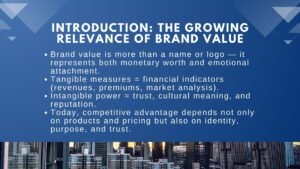
The value of a brand has long been elusive. A brand isn’t a building, a warehouse, or an intellectual property portfolio – it’s in the minds of its customers, and driven by experience, emotions, and perceptions. But in the 21st century, brand value is often one of the most important components of overall market capitalisation. For entry to mid-level managers in marketing, finance, or strategy, it is essential to be able to measure and manage brands. It is a key skill that influences the allocation of resources, mergers and acquisitions, and long-term strategy.
The biggest change in the last 10 years is the tools brand analysts have at their disposal. Old-school techniques relying on financial inspections, consumer focus groups, and past revenue are being complemented and sometimes replaced by cutting-edge technology. With the advent of AI in brand valuation, it’s now possible to process real-time data to assess brand sentiment, monitor brand performance in the digital arena, and predict future brand value with a degree of accuracy that was once inconceivable. For those working in this space, it’s not simply a matter of knowing what a brand is worth today – it’s also about predicting its future value.
This piece delves into the fundamentals of brand valuation, the role of artificial intelligence and analytics in this field, and the skills needed to thrive. So whether you’re studying to work in brand management, marketing analytics, or business strategy, this article provides a primer on one of today’s hottest, value-adding aspects of business.
AI and Data-Driven Brand Valuation Trends: Understanding Modern Brand Valuation Methods and Business Impact
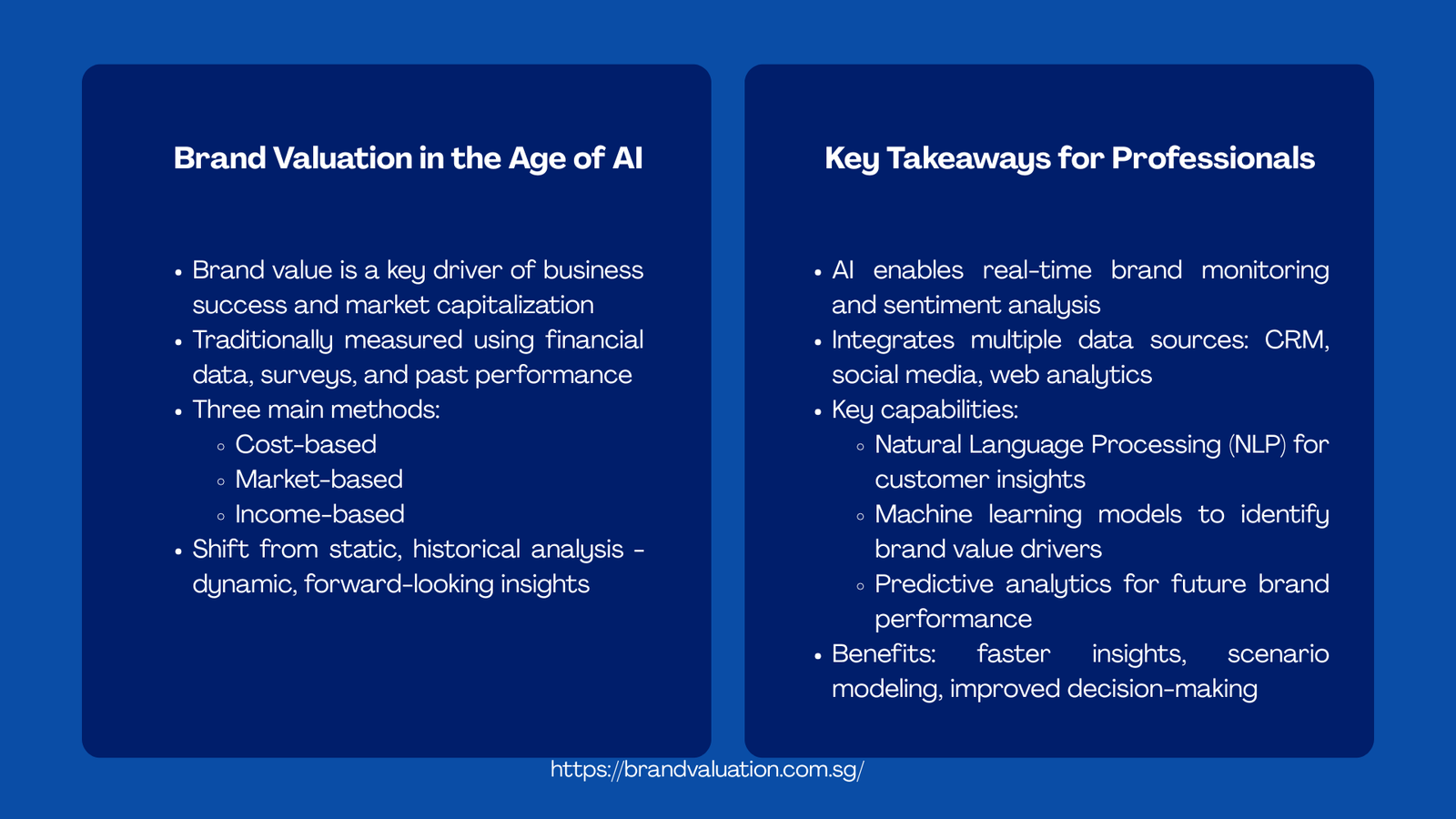
Brand valuation is an attempt to calculate the value of the brand. It is important for a variety of business purposes: when a firm is sold, when brand licensing deals are negotiated, when financial statements are prepared, or when marketing expenditures are justified to the company’s senior management. A brand’s value includes the capacity of the brand to increase future revenues beyond that attainable by a generic or unbranded product – this is sometimes referred to as the brand’s economic contribution.
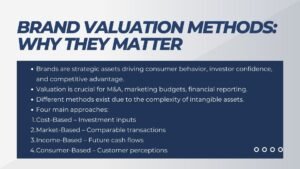
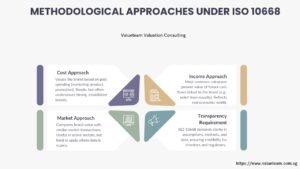
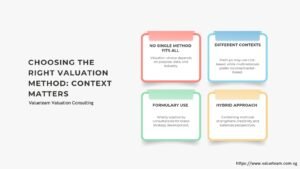
There are three key methods of valuing a brand. The cost-based method is an estimate of the cost to replicate the brand. The market-based method is a relative comparison of the brand to others in the market. The income-based method (the most widely used), values the brand based on the net present value of future brand-related income. All three methods have their strengths, and in practice, a valuation analyst will triangulate between the three to get a defensible answer.
For aspiring brand valuators, it’s worth remembering that the value of brands is not a single number, but rather a range of estimates. It’s a combination of financial and market analysis and professional judgement. The role of technology is to refine the inputs to the analysis, to support those judgements. Knowledge of both the traditional structure and the new data-driven methods is a real asset to today’s marketers.
Process Flow: Traditional vs. AI-Enhanced Brand Valuation — Key Differences
| Traditional Brand Valuation Process | ||
|---|---|---|
| Step 1 | Define Brand Scope Specify the brand, markets, and product lines to value. | ▼ |
| Step 2 | Gather Financial Data Gather past revenues, profits, and market share. . | ▼ |
| Step 3 | Conduct Consumer Research Conduct surveys and focus groups to determine brand awareness. | ▼ |
| Step 4 | Apply Valuation Model Apply the cost, market, or income approach. | ▼ |
| Step 5 | Validate and Report Review with auditors and report to stakeholders. | ✓ |
| Data-Driven Brand Valuation Process | ||
|---|---|---|
| Step 1 | Integrate Data Sources Integration of CRM, social media, web, and sales data. | ▼ |
| Step 2 | Perform Sentiment & NLP Analysis Leverage AI platforms to understand brand mentions, reviews, and comments. | ▼ |
| Step 3 | Build Brand Equity Model Estimate brand drivers with machine learning techniques. | ▼ |
| Step 4 | Apply Predictive Layer Predict brand value in various scenarios. | ▼ |
| Step 5 | Continuous Monitoring Build dashboards to monitor brand performance. | ✓ |
AI and Data-Driven Brand Valuation Trends: How Artificial Intelligence is Transforming Brand Valuation
Bringing ai to brand valuation is more than just digitising tasks that people do. It revolutionises the questions that can be asked and the time it takes to get the answers. Natural language processing (NLP) enables AI models to process millions of customer reviews, tweets, blogs, and press articles to assess consumer sentiment towards a brand in fine detail. AI can be used to recognise which brand attributes – quality, trust, innovation, value – are most likely to influence consumers to buy and willingness to pay a premium in a particular market.
Perhaps the most valuable use case is modelling. Brand strategists in organisations such as Nike and Unilever can use AI to simulate scenarios: how will the brand value be impacted if a celebrity spokesperson is involved in a scandal? What will the impact of a green marketing campaign be on brand equity among millennials? Such what-if scenarios, typically the preserve of costly consultancy projects, can be run quickly with a trained model. The application of AI in brand valuation takes the high-end analysis “in-house”: the analysis can be done by the client instead of the consultants.
But the challenge is the quality of the data and the interpretability of the model. An AI model can only be as effective as the data it is trained on, and data related to brands can be complex – containing humour, cultural references, and context-specific meaning. AI models may not work well across different markets. For those embarking on a career in this area, an appreciation of AI systems – not only what they say, but why, and ensuring the data used to train the system is representative of the real world – is as important as anything.
5-Step Framework for Building Data-Driven Brand Valuation Models
To create or refine brand valuation strategies, here are five steps that organisations can use. These build on each other to establish a holistic approach that is robust, rigorous, and practical.
Table 1: 5-Step Framework for Building Data-Driven Brand Valuation Models
| Step | Action | Key Tools / Methods | Common Challenges |
|---|---|---|---|
| 1 | Define brand value drivers | Workshops, brand architecture assessment | Lack of alignment across departments |
| 2 | Create a data foundation | CRM, API data feeds, data warehouse | Isolated systems, data integrity problems |
| 3 | Implement AI-powered analytics | NLP sentiment tools, ML brand equity models | Bias, lack of model explainability |
| 4 | Apply predictive modelling | Predictive analytics tools, simulation tools | Lack of data for emerging markets |
| 5 | Embed into decision-making | Executive dashboards, brand P&L reporting | Reluctance to cultural change |
Many brands keen to get into the business of analytics skip the first step – defining brand value drivers. If you don’t know which brand attributes are important in driving preference and financial outcomes in your category, then your model will be uninformed. The second step – building the data architecture for the model – is where cross-functional collaboration and IT investment (in larger organisations) may be required. This involves integrating marketing, sales, and customer service data, which may require collaboration across different business units, and in large companies, a major IT investment.
It’s in steps three and four that we see the true potential of AI in brand valuation and how predictive analytics for brand value can help. The use of AI moves the framework from retrospective to predictive. The fifth step – putting insights into action – is probably the hardest. Models and data are only valuable to the extent that they help leaders to make better decisions about pricing, marketing, investment, and to build their brands.
AI and Data-Driven Brand Valuation Trends: The Future of Predictive Analytics in Brand Measurement
Predictive analytics for brand value is perhaps the most important of the new technologies impacting brand value. Predictive analytics use past brand value metrics, market and economic data, and consumer insights to offer projections of brand value. For a company’s chief marketing officer contemplating a multi-million dollar media investment, a reliable forecast of how this investment will shift brand value (not just brand awareness or recall) is of great value.
A case in point is Amazon. It has long applied predictive analytics to not only understand purchase behaviour, but the impact on customer lifetime value of brand trust – derived from reliable delivery, responsive customer service, and consistent pricing. Using data on brand perceptions, in conjunction with data on purchasing behaviour, Amazon analysts can model the impact of changes in brand equity on revenues with a level of accuracy that is unmatched by most competitors. The use of predictive modelling for brand value in business planning is becoming the norm expected by boardrooms.
For junior employees, the implication is to get familiar with the notion of brand ROI modelling. That is, regression, correlation between brand performance measures and sales, and time-series modelling. You don’t need to be a data scientist, but you do need to be a savvy user of data science tools, in terms of understanding the assumptions and limitations of the models, interpreting the results, and being able to present them to senior management. These are essential skills for brand, marketing strategy and commercial finance professionals.
Tabel 2: Key Differences Between Traditional and AI-Enhanced Brand Valuation Models
| Dimension | Traditional Approach | AI & Data-Driven Approach |
|---|---|---|
| Data Sources | Surveys, financial reports, audits | Social, CRM, web analytics, IoT |
| Update Frequency | Annual or bi-annual | Real-time or near real-time |
| Cost of Analysis | High (external consultants) | Lower at scale (internal platforms) |
| Predictive Capability | Limited (backward-looking) | High (scenario modelling, forecasting) |
| Subjectivity Level | High (analyst judgement) | Lower (modelling, but not zero) |
| Accessibility for SMEs | Limited | Growing (SaaS tools available) |
Common Pitfalls and Best Practices in Data-Driven Brand Valuation
Although technology offers a powerful opportunity to support brand valuation projects, they are often plagued by common issues. An obvious one is the assumption of brand value as a fixed number rather than a range of values that fluctuates in response to changing market conditions. A company’s brand value in a bull market is much different to its value following a recall scandal or change of CEO. Those who recognise this range and incorporate it in their reporting can be much more helpful to management than those who report a single value.
A second error is that too much weight is being placed on sentiment. It’s great to have good sentiment online, but sentiment and sales may be correlated. A brand may be very popular on social media but have poor sales, or vice versa. The takeaway message here is that brand measures should be related to financial performance, if possible. It is the task of brand strategists to make this link between attitudes and earnings, and that is what sets apart junior analysts from seasoned brand managers.
Finally, companies are often not willing to put the required effort into change management when adopting data-driven brand valuation techniques. Staff may not know how to use the new dashboards, or managers may be sceptical of model results that conflict with their perceptions. The best practices combine the technology with a wide range of training, a “brand data literacy” program. The importance of analytics-savvy teams within their marketing organisations has been discussed by companies such as LVMH and Nestlé.
AI and Data-Driven Brand Valuation Trends: Key Insights, Skills, and Strategies for Future Brand Professionals
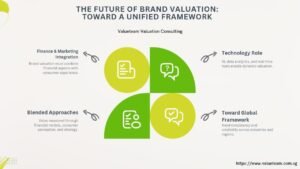
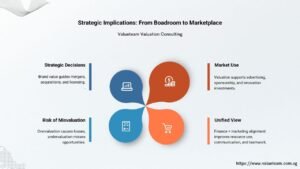
Brand valuation is no longer an annual event that’s solely the responsibility of the finance team. In the era of AI in brand valuation and real-time data, brand valuation is now a continuous process – one that involves the marketing, finance, technology, and strategy departments. There are some things in particular that those looking to pursue a career – or to move up the ladder – should focus on.
Build your analytical foundation. Familiarise yourself with the most common brand valuation approach based on income – it is used by most companies for financial reporting purposes. And gain an understanding of how consumer perception data is gathered and analysed, and relates to business performance. The Marketing Accountability Standards Board (MASB) and ISO 10668 brand valuation standard are great resources and available for free.
Get hands-on experience with tools. Social listening, business intelligence, and brand tracking software (such as Brandwatch, Sprinklr, Salesforce Marketing Cloud) are widely used by companies. Experiences with one or two will assist in your role as an analyst and improve your job prospects. With predictive analytics for brand value becoming the norm, having experience with predictive analytics concepts and tools like Python or R for data analysis is valuable.
Be sceptical and inquisitive. Analytics and AI tools are not foolproof. The true value-add is not found in professionals who unquestioningly accept the results of models, but rather in those who understand the assumptions, limitations of the data, and apply human judgement to the questions of brands. Brands are a human story and relationship – and no model tells that story. Being able to hold both the quantitative and the qualitative aspects in your mind is, after all, your key point of difference in an area that will be increasingly important as businesses increasingly compete on intangibles.
AI and data driven brand valuation methods’ era of brand valuation is a fertile field. Those who take the time to learn their principles, tools and limitations now will be well positioned to be at the forefront of some of the biggest conversations in business – conversations about what a company really stands for, and what it is worth.