ESG Trends Enhancing Brand Value
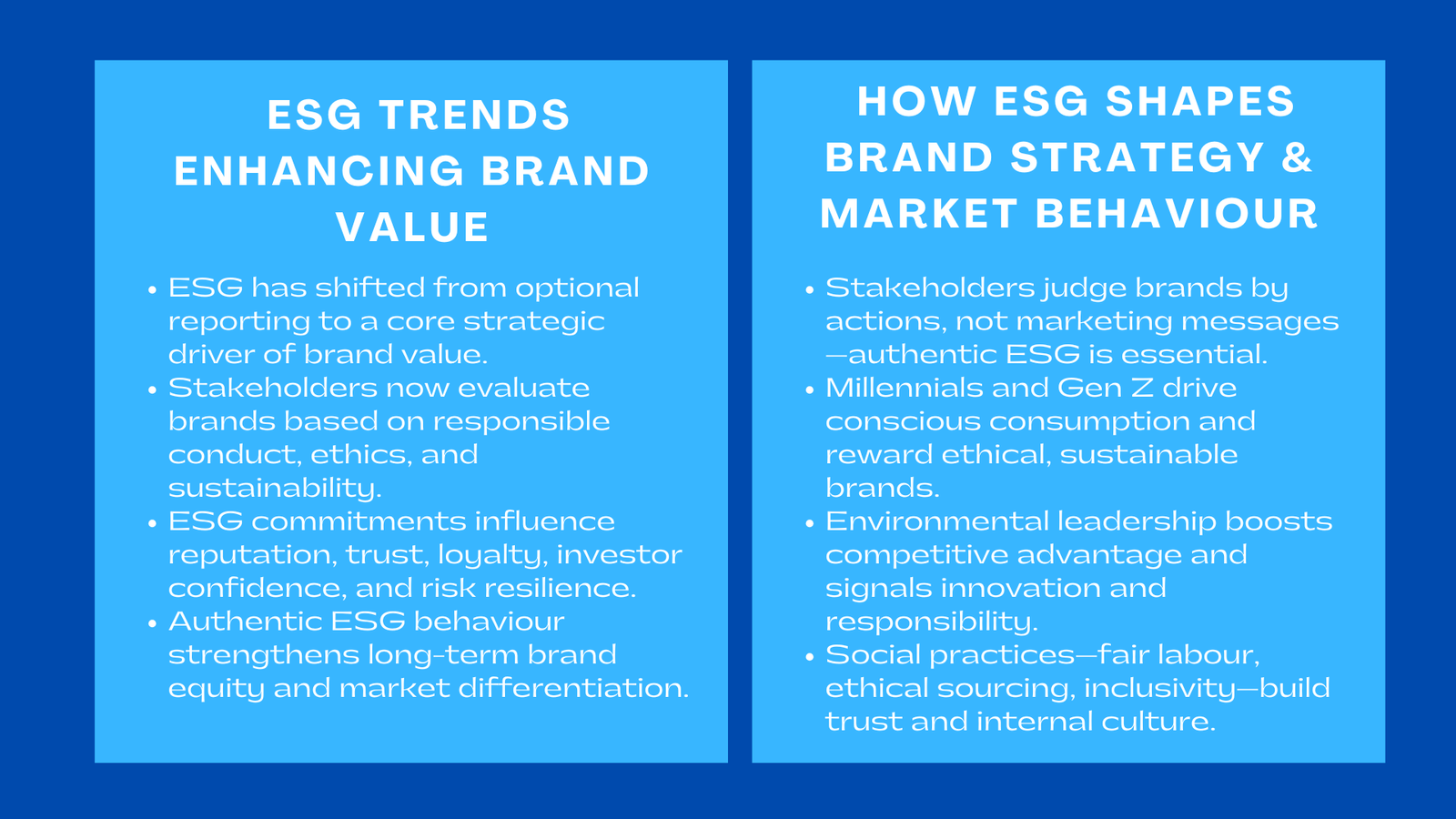
In recent years, Environmental, Social, and Governance (ESG) considerations have shifted from being peripheral corporate disclosures to becoming central pillars of strategic decision-making. The global market now rewards brands not only for financial performance but also for their commitment to responsible conduct, ethical practices, and long-term sustainability. As consumers, investors, regulators, and employees increasingly evaluate companies based on ESG behaviour, the relationship between sustainability and brand equity has grown unmistakably strong. Organizations across industries have realized that brand value is no longer shaped solely by traditional marketing activities but by the authenticity and depth of their ESG commitments. This evolution positions ESG as a decisive force in modern brand strategy, influencing reputation, loyalty, investor sentiment, risk resilience, and market differentiation. Companies that understand the ESG impact on brand strategies can harness sustainability as both a competitive advantage and a long-term value creation engine. In parallel, the pursuit of sustainable brand development ensures that organizations cultivate brand equity that is enduring, credible, and aligned with global expectations for responsible corporate citizenship.


The Expanding Importance of ESG in Modern Brand Building
The Shift From Corporate Messaging to Corporate Integrity
Consumers increasingly base their perceptions of brands on actions rather than advertising. Traditional marketing messages are no longer sufficient to cultivate trust; instead, stakeholders scrutinize how a company behaves in relation to environmental stewardship, ethical labour practices, community engagement, and governance accountability. In this new environment, ESG becomes inseparable from brand authenticity. Companies that demonstrate transparency, accountability, and genuine commitment to sustainability build stronger emotional connections with consumers, whereas brands that engage in superficial or symbolic ESG claims often face reputational backlash. This shift highlights the strategic need for organizations to embed ESG deeply into their operating models rather than treating it as a marketing add-on, especially for those working with a sustainability and ESG services Singapore company.
The Rise of Conscious Consumers and Ethical Purchasing Behaviour
Generational shifts, particularly among Millennials and Gen Z, have transformed expectations of brand behaviour. These consumers assess companies not just for the quality of their products but for the values they represent. A brand’s environmental footprint, diversity initiatives, sourcing practices, and ethical standards increasingly influence purchasing decisions. As conscious consumption grows, the market naturally rewards brands that align with social and environmental ideals. This behavioural evolution underscores how ESG trends directly enhance brand value by deepening consumer loyalty, increasing advocacy, and enabling premium pricing on sustainable products.
ESG as a Strategic Driver of Competitive Differentiation
Environmental Leadership as a Catalyst for Market Advantage
Environmental stewardship has become one of the most influential dimensions of brand strength. Companies that achieve measurable progress in reducing carbon emissions, conserving natural resources, and adopting circular economy principles enhance not only operational resilience but also market perception. Environmental commitments signal innovation, responsibility, and future readiness. As climate concerns intensify, brands that lead environmental initiatives position themselves as trustworthy and forward-thinking, capturing the loyalty of environmentally conscious consumers and standing apart from competitors that lag behind sustainability expectations.
The Social Dimension: Building Trust Through Responsible Human Practices
In the social arena, brands are evaluated on their treatment of employees, communities, and supply chain partners. Social commitments—including fair wages, ethical sourcing, inclusivity, health and safety, and community investment—become powerful contributors to brand reputation. This dimension of ESG strengthens internal culture and enhances external trust. For many global stakeholders, a brand’s social performance serves as a proxy for its overall integrity. Companies that demonstrate genuine care for people reinforce their credibility, making social responsibility an enduring contributor to sustainable brand development.
Governance as a Foundation for Ethical and Transparent Brand Identity
Governance, although less visible to the public than environmental or social initiatives, is fundamental to the credibility of ESG-led brands. Strong governance structures—characterized by ethical leadership, diversity in the boardroom, transparent reporting, anti-corruption safeguards, and responsible risk management—build confidence among investors and consumers alike. Good governance demonstrates that sustainability commitments are not superficial but embedded in the organization’s DNA. This reinforces brand integrity and reduces reputational risks that could undermine long-term brand equity.
How ESG Shapes Brand Strategy and Decision-Making
Integrating Sustainability Into Core Brand Positioning
Modern brands increasingly position themselves around purpose-driven narratives that reflect ESG commitments. These narratives must be authentic and supported by measurable progress to resonate with audiences. When ESG becomes central to brand positioning, it shapes everything from product development and customer experience to communication strategies and market outreach. As a result, ESG-driven positioning builds brand differentiation, strengthening emotional engagement and reinforcing long-term loyalty. This becomes particularly powerful in competitive markets where functional product differences are minimal, making sustainability a critical dimension of value.
Enhancing Innovation Through ESG-Aligned Product Development
Sustainability is no longer a constraint but a catalyst for innovation. Companies across industries are designing products that minimize environmental impact, support social well-being, and uphold ethical sourcing standards. Sustainable materials, energy-efficient technologies, circular design systems, and socially responsible supply chains have become essential components of product strategy. This innovation not only enhances the consumer experience but amplifies brand value by demonstrating commitment to meaningful progress. The ability to innovate sustainably strengthens brand relevance in markets where consumers expect brands to lead change rather than react to it.
Using ESG Metrics as Part of Strategic Decision Support
As companies adopt structured ESG frameworks, valuation and strategy teams increasingly integrate ESG metrics into decision-making processes. These metrics include climate-related risks, labour condition indicators, diversity ratios, supplier transparency levels, and governance compliance scores. Incorporating these indicators into brand strategy allows organizations to anticipate risks, identify opportunities, and align brand decisions with broader societal expectations. In this way, ESG functions as a sophisticated form of strategic decision support, informing how the brand evolves and which investments are necessary to enhance both value and resilience.
ESG as a Catalyst for Sustainable Brand Development
Building Long-Term Brand Equity Through Sustainability Commitments
Sustainable brand development requires a long-term vision that aligns financial success with societal and environmental well-being. Brands that adopt sustainability not as a trend but as a core operational philosophy create equity that endures across generations. Long-term brand equity grows when stakeholders witness consistent, measurable progress in ESG initiatives. This stability fosters deeper trust and emotional resonance, reinforcing the brand’s reputation even during periods of uncertainty or market volatility.
Strengthening Risk Management and Protecting Brand Reputation
ESG-related risks—from climate disruptions to labour controversies and governance failures—pose significant threats to brand equity. Companies that proactively address these risks through robust ESG policies are better positioned to protect their reputation and maintain consumer trust. Risk mitigation becomes a key component of sustainable brand development, ensuring that brand value is not eroded by scandals, environmental incidents, or governance lapses. Strong ESG frameworks therefore act as a shield that safeguards long-term brand resilience.
Aligning Investor Expectations With Brand Sustainability Values
Investors increasingly allocate capital toward companies that demonstrate strong ESG performance. Sustainable brands attract not only consumer loyalty but also investor confidence. Transparent reporting, ethical governance, and measurable environmental impact become critical components of investment evaluation. By aligning brand strategies with sustainability values, companies create value across financial markets while enhancing their operational credibility and long-term stability. ESG thus becomes a vital contributor to brand development both internally and externally.
ESG Influences on Consumer Engagement and Brand Perception
Shaping Authentic Customer Relationships Through Responsible Behaviour
Consumers reward brands that demonstrate real accountability, not symbolic gestures. ESG commitments allow companies to cultivate more meaningful and authentic relationships with their audiences. These relationships are grounded in shared values and reinforced by transparent actions. When companies communicate their ESG progress openly and consistently, they build emotional loyalty that surpasses functional loyalty. This depth of connection becomes a powerful driver of long-term brand value.
Enhancing Brand Loyalty Through Purpose-Driven Engagement
Brand loyalty in the modern age is strengthened by purpose-driven engagement. Consumers increasingly prefer brands that contribute positively to society, advocate for important issues, and demonstrate responsibility in their operations. ESG initiatives offer companies a structured mechanism through which they can express purpose and build stronger bonds with their communities. These bonds elevate loyalty beyond transactional behaviour, anchoring it in shared ethical commitments.
Creating Differentiation Through ESG Storytelling and Transparency
Transparency is essential in a world where stakeholders have access to information instantly. ESG reporting, sustainability campaigns, purpose-driven narratives, and impact disclosures provide fertile ground for storytelling that differentiates the brand. Effective ESG storytelling enhances brand visibility, reinforces credibility, and elevates the brand’s cultural relevance. This narrative-driven differentiation becomes a competitive advantage in global markets where authenticity is increasingly rare and highly valued.
Conclusion to ESG Trends Enhancing Brand Value
ESG has become one of the most influential forces shaping modern brand value. Companies that recognize the profound ESG impact on brand strategies are able to build stronger, more trustworthy, and more resilient brands. By embedding sustainability into core operations, product innovation, corporate governance, and long-term planning, organizations achieve more than regulatory compliance—they cultivate enduring competitive advantage. In this evolving landscape, ESG serves as both a catalyst and a foundation for sustainable brand development, enabling companies to create meaningful value for consumers, investors, and society. Brands that commit to credible, transparent, and purpose-driven ESG strategies position themselves at the forefront of future markets, securing relevance and equity for decades to come.