What Factors Affect Brand Value?
A Strategic Guide for Professionals Building Brand Knowledge
Introduction to What Factors Affect Brand Value?
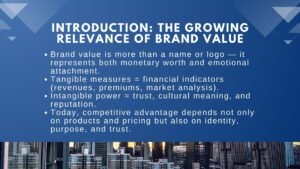
Brand value is among the most effective – as well as most misinterpreted – possessions a company may have. It cannot be touched or warehoused like machinery, property or inventory. For many of the most successful firms around the globe, however, it’s the biggest item on the balance sheet. Top brand intelligence companies have placed the worth of Apple’s name at more than USD 500 billion. As far as customers are concerned, brand value is what drives them to pick you over another company, what price they’re willing to pay for your product and how much they’ll pay if something goes wrong.
It is increasingly a key skill for anyone coming into or expanding their career in commercial, marketing, strategy, or finance roles to know what factors drive brand value. Brand is no longer in the hands of the creative department; it is a cross-functional challenge that extends to every interaction with a customer, every hiring decision made by a company and every public communication the company makes. The factors which influence the brand value is therefore deserving of thorough and practical answer.
This article delves into the most important contributors to brand value in terms of perception, delivery, culture and governance. It explores how top brands establish, sustain and cultivate brand equity over time (and what happens when they do not). The information presented is intended to be usable in the field, in brand management, corporate strategy, investor relations and beyond.

The Foundation: What Brand Value Actually Means
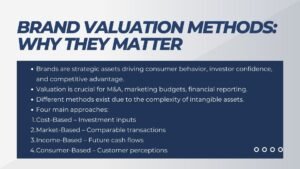
Brand value, broadly speaking, is the additional value that is created by a brand over an identical but non-branded product or service. On a financial level, it can be measured as the NPV of future earnings that are due to the brand, as calculated using formal brand valuation techniques used by companies like Interbrand, Kantar BrandZ and Brand Finance. Companies, investors and analysts use these yearly rankings as a benchmark for company performance in the world.
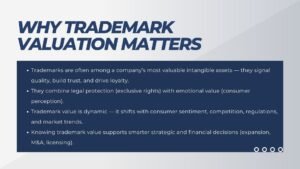
Brand value is not solely on financial terms. It involves consumer perceptions, emotional connections, market share, price control, and how much a brand can withstand if a product fails, a scandal rocks the leadership, or the economy goes sour. You know the benefits of brand valuation when you realize there is no marketing campaign that can be executed quickly to bring those benefits; a powerful brand can help lower the cost of acquiring customers, bring in top talent, gain the trust of investors and help deflect competitive threats.
It is important to understand the value of brands as it is not static. A brand can be created over years, and destroyed in a matter of days. Nokia was the leader in mobile phone sales in the early 2000’s with more than 40 per cent of the world’s sales and as the market made the transition to the smartphone Nokia’s brand value plummeted in a few years. Brands such as LEGO, by contrast, have shown great longevity — emerging from near bankruptcy in 2004, and remaining one of the world’s most valuable brands by adapting their story and products to the changing needs and values of the world.
Five Key Factors That Drive Brand Value
Although each brand is situated in its own context, studies and experience have shown there are key elements which affect the increase, maintenance or decrease of brand value. These are not steps in sequence, but it’s more like levers that work together – there’s very little long-term impact when one lever is pulled without the other.
- Customer Perception/Awareness: Brand value starts with the awareness of the brand and its perception among customers. Awareness is the prerequisite for all other – if people don’t know a brand they can’t choose it. Withdrawing from awareness without positive perception, however is of little value. Brands such as Dove have proved to have a tremendous effect on brand equity by simply changing the way people think about a product category (in Dove’s case, defining beauty through their Real Beauty campaign). The direct experience customers have with a product or service is most influential on perception, followed by advertising, word of mouth, earned media, and maybe most importantly, nothing.
- Product and Experience Quality: Marketing can do nothing for the lack of product and experience quality. What really adds value to your business’s brand is simple: provide what you say you will provide, in a consistent manner at each customer interaction. Toyota’s reputation around the world was not established by advertising, but with the constant use of quality principles that had become known in the Toyota Production System as an ageless method of producing cars that were known for their reliability. As the quality of the products wanes, so does the value of the brand. Toyota has found this out the hard way in its 2009-2010 recall nightmare, when quality issues cost the company an estimated USD 2 billion for the recalls as well as a loss of brand equity.
- One of the most important what influences brand value factors that an organisation can control is marketing investment and consistency – sustained and coherent marketing investment. Brands that are consistently communicated, both in terms of visual identity, tone and message, in the long term develop a place in the customer’s mind and heart that competitors can only work very hard to take. For years, Nike has been synonymous with aspiration, athletic success, and cultural relevance. The outcome is a brand which requires little to no explanation all over the world. Most importantly, consistency does not imply repetition, it means coherence over a developing creative strategy.
- Culture, Talent & Internal Brand Alignment: A brand is, after all, a promise to customers. That is the promise that is given by people. By fostering positive employee brand engagement in the organization, employees will create better customer experiences, better advocacy, and more authentic external communications. The high ranking of Google as one of the top employers’ brands isn’t a coincidence: it’s a deliberate move that has made it a brand that is consistent with its culture. On the other hand, businesses that are not authentic in their branding, both from the outside and the inside, are likely to experience authenticity issues that will lead to a loss of trust in the brand over time.
- ESG Performance and Corporate Reputation: Environmental, Social and Governance performance is one of the most impactful KVs of this decade. There is a growing trend toward considering companies from an ESG perspective by investors, customers, and employees. Having a robust ESG reputation helps convey a sense of integrity, long-term thinking, and accountability for wider impact. Patagonia’s brand’s worth is linked to its dedication to the environment. The global flooring company, Interface, is improving its brand and market positioning as part of its Mission Zero sustainability programme. On the other hand, the damage to a brand’s value can be in the billions in a matter of weeks, when it’s the result of an environmental disaster, such as BP’s Deepwater Horizon in 2010.
Table 1: Key Factors That Affect Brand Value — Quick Reference
| Factor | Category | Impact on Brand Value | Example |
|---|---|---|---|
| Brand Awareness & Recall | Perception | The higher the Recall, the more pricing power. | Coca-Cola’s global omnipresence |
| Customer Loyalty & NPS | Relationship | The loyal customers can lower acquisition expenses. | Apple’s ecosystem retention |
| Quality & Product Consistency | Delivery | Consistency builds long-term trust | Toyota’s manufacturing standards |
| Marketing Investment | Communications | When it comes to spending on a brand, it adds up over time. | For decades Nike has been telling stories.Nike has been telling stories for decades. |
| ESG & Ethical Reputation | Governance | ESG scores help to draw in capital and talent. | Patagonia’s mission-led model |
| Employee Advocacy | Culture | Actively employees to convey genuine brand messages | Google’s Employment Brand Score Rankings |
| Innovation Perception | Strategy | Innovators are worth higher valuations, if seen | Tesla’s disruption premium |
Processes for Building Brand Value: From Strategy to Measurement
Creating brand value isn’t a campaign, it’s a discipline of the organisation. Firms that do so achieve better brand equity scores and business performance than other companies. This process starts with the initial identification of the identity, moves on to the ongoing renewal of the identity, and culminates in measurement and external validation at the midway point and further.
It always begins with brand strategy; what is a brand, who does it appeal to and how is it better than the other? This means that it must be done in an honest and evidence-based manner, involving customer research, competitive mapping and leadership alignment internally. Many organisations overlook this base or forget about it over time, resulting in an incoherent, undifferentiated, and not aligned with the actual experience that customers have with the brand. One of the quickest ways to destroy value is to not deliver what the brand promises.
Many organisations under invest in measurement. There are quantitative measures to track brand value, such as brand awareness scores, Net Promoter Scores, share of voice, premium pricing data, among others, but there is also qualitative assessment of how the brand is perceived in the market. Companies that turn to brand valuation report services get access to strong, credible brand valuations that are externally validated to give it credibility with boards, investors, and regulators. The reports also give a baseline of progress to be measured year-on-year, giving brand management a more objective focus.
Table 2: Brand Value Building — A Stage-by-Stage Process Flow
| Stage | Focus Area | Key Activities | Success Metrics |
|---|---|---|---|
| Foundation | Identity & Positioning | Define purpose, values, visual identity, tone of voice | The campaign scored a brand awareness lift and high scores on recall. |
| Delivery | Product & Experience | Ensure product quality and CX is aligned with brand promise | The data can be used to measure customer satisfaction (NPS), repeat purchase rate, etc. |
| Amplification | Marketing & Storytelling | Make investments in sustained and consistent brand communications. | Think about the sentiment in the media and share of voice. |
| Advocacy | Loyalty & Community | Develop loyalty programmes, employee advocacy and community involvement. | NPS promoters + advocacy index, % |
| Measurement | Valuation & Reporting | Get brand valuation report services; monitor financial brand equity | The value of the brand in dollars and the rank of the brand based on this value by BrandZ/Interbrand. |
| Renewal | Innovation & Relevance | Refresh brand positioning as market and culture evolve | Brands are relevant if they align with the trends. |
Challenges, Erosion Risks, and Lessons from Real Cases
Even the best brands are vulnerable to attack, whether it is an anticipated one or a completely surprising one. When it comes to brand value erosion, knowing the most common culprits can help professionals prepare for the risks and be better equipped to handle them when they do arise.
Over-extension, inconsistencies or lack of quality control are among the worst challenges, which is called brand dilution. This was a problem for Burberry in the mid-2000s, as the company was losing its luxury image due to too many product lines and an influx of counterfeits and mass-market consumers. With a new outfit, the company embarked on a disciplined brand revitalisation campaign, cutting back on product range, recovering the creative brief and repositioning the brand by focusing on selective distribution and high profile marketing. It took almost ten years for the brand to be revived but eventually Burberry regained its ‘premium’ status and brand value.
Reputational crises are quicker and more drastic ways of damaging a brand’s value. One of the worst brand moments of the decade happened in 2017 when a passenger was forcibly dragged off a full airplane by United Airlines.One of the worst brand experiences of the decade occurred in 2017 with a video of a passenger being forcibly removed from an overbooked flight by United Airlines. The initial tweet by the brand, which was kind of dismissive, only heightened the public’s anger, which had an impact on the brand sentiment and the preference of the customers. The lesson learned (with a real-life reason to believe that company values are important during crises) is that the way companies react to crises can be as important as the crises. The mediums of good crisis communication are speed, authenticity and real accountability.
The third is the lack of evolution. Brands that do not renew as values, competitive interests and technologies evolve slowly lose their relevance and thus in value. One of the classic failures is Blockbuster’s inability to see or adjust to the digital streaming revolution. The brand’s customer loyalty and recognition were huge during its glory days but had failed to deliver the same competitive strength in the new era. This highlights not only the value of having a business brand but those that will continue to be relevant for tomorrow.
Table 3: Brand Value Erosion — Warning Signs and Corrective Actions
| Warning Sign | Likely Root Cause | Corrective Action | Timeline |
|---|---|---|---|
| Declining NPS scores | Customer experience gap | Retro- and re-design CX journey | 0–3 months |
| Rising negative media coverage | A good reputation or product problem. | A proactive crisis response that is led by the CEO. | Immediate |
| Talent attrition spike | A mismatch between culture and leadership.Mismatch in culture and/or leadership. | Sharing good practice; peer review; and internal culture audit. | 1–6 months |
| Loss of pricing power | Weakened differentiation | Review of brand positioning and innovation pipeline; | 3–12 months |
| Lower ESG ratings | Gaps in governance/reporting | Brand valuation report services for the Commission and disclosure refresh on ESG. | 3–9 months |
| Flat or falling brand rankings | Inadequate messaging or identity.Poor message/content or identity. | The brand needed a refresh and a reset in the creative approach. | 6–18 months |
The Measurement Imperative: Valuation, Reporting, and Strategic Use
One issue that is often overlooked in the way organisations use to value their brand is the lack of formal measurement of the brand-building efforts. Marketing campaigns are measured at the campaign level, with campaigns measured by impressions, click through rate, social engagement, etc., but these are not linked in with financial brand equity or value creation in the longer term. This means that it is challenging to convince boards or CFOs of the value of brand investment or show ROI on big brand projects.
Brand Value is so important at organisation level because of this. Once the brand value is numerically expressed, it’s manageable. It is part of a discussion on where to spend its dollars, how much to pay for its acquisitions, whether or not to license it to others, and what must be revealed to the regulators. In a takeover scenario, the brand value can play a significant role in the premium paid in the deal – knowing the nature of that value and the probability that it can be maintained or enhanced is important to the deal rationale.
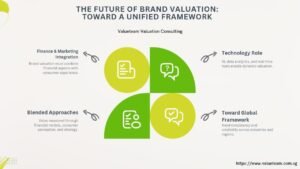
The best organizations see the measurement of their brands as a strategic role, and not as an afterthought of marketing. They monitor their position in the ranking of Global brands like the Interbrand’s Best Global Brands or Kantar’s BrandZ Most Valuable Brands. They hire custom brand valuation report companies to gauge the monetary effect of a selected brand investment or to create bespoke brand valuation report for licensing, M&A or investor relations reasons. And they rely on what shapes brand value frameworks to organize regular internal brand health reviews to ensure senior leadership is on the same page when it comes to brand priorities.
It’s also important to highlight the relationship between brand measurement and brand strategy. The insights gained from brand valuations will frequently help to identify the areas of the business that have high promise of driving value, and those that are coming under strain, providing a solid evidence base for prioritisation for brand teams and executives. A company that has completed a brand health audit and finds that its quality perception is high but their perception of innovation is low can make specific investments in innovation, instead of doing everything.
Conclusion: What Factors Affect Brand Value?
Brand value is developed at the crossroads of strategy, culture, quality, communication and governance – and guarded by diligent measurement and openness to change. Professionals, whether junior on the rise or seasoned executive, will reap the benefits of mastering the elements that affect brand value in all their business endeavors.
Here are some tips you can take with you on your job:
- Consider brand as an asset and not a campaign. Marketing activities create brand equity over the long term; the brand itself is owned by the organisation and resides in its minds. Treat it as you would on any balance sheet!
- Match inside to outside. The best brands are those that have matching employee experience and customer experience. Put as much effort as you would into marketing into internal brand alignment.
- Relate brand performance to business results. Make a case for Brand investment – connect brand health to revenue drivers such as pricing power, customer retention, talent acquisition costs. This is the way that brands get to the executive table.
- Watch for warning signs in a timely fashion. It takes time for brand value erosion to occur. Monitor the early warning signs — NPS score, media sentiment, attrition of talent, ESG ratings — and take corrective action before the smallest of the problems turns into a big one.
- Make investments in believable measurement. Use brand valuation report services to confirm brand equity, compare with competitors and to provide a basis for decision making. If you can’t measure it, you can’t manage it — and, if you can’t manage it, you can’t improve it.
In the end, it is about consistently delivering on the brand, communicating honestly about it, setting the standards high with regard to its governance, and willing to invest the time and effort into the long-term when short-term pressures are pulling against it. Brands which do it well do not only achieve higher valuations, they gain the trust of their customers, employees and investors, and do so in a way that provides a lasting competitive edge. In a marketplace where the trust deficit is growing and is a growing factor, maybe that’s the most important asset of all.