What is Brand Equity and Why It’s Key to Business Success
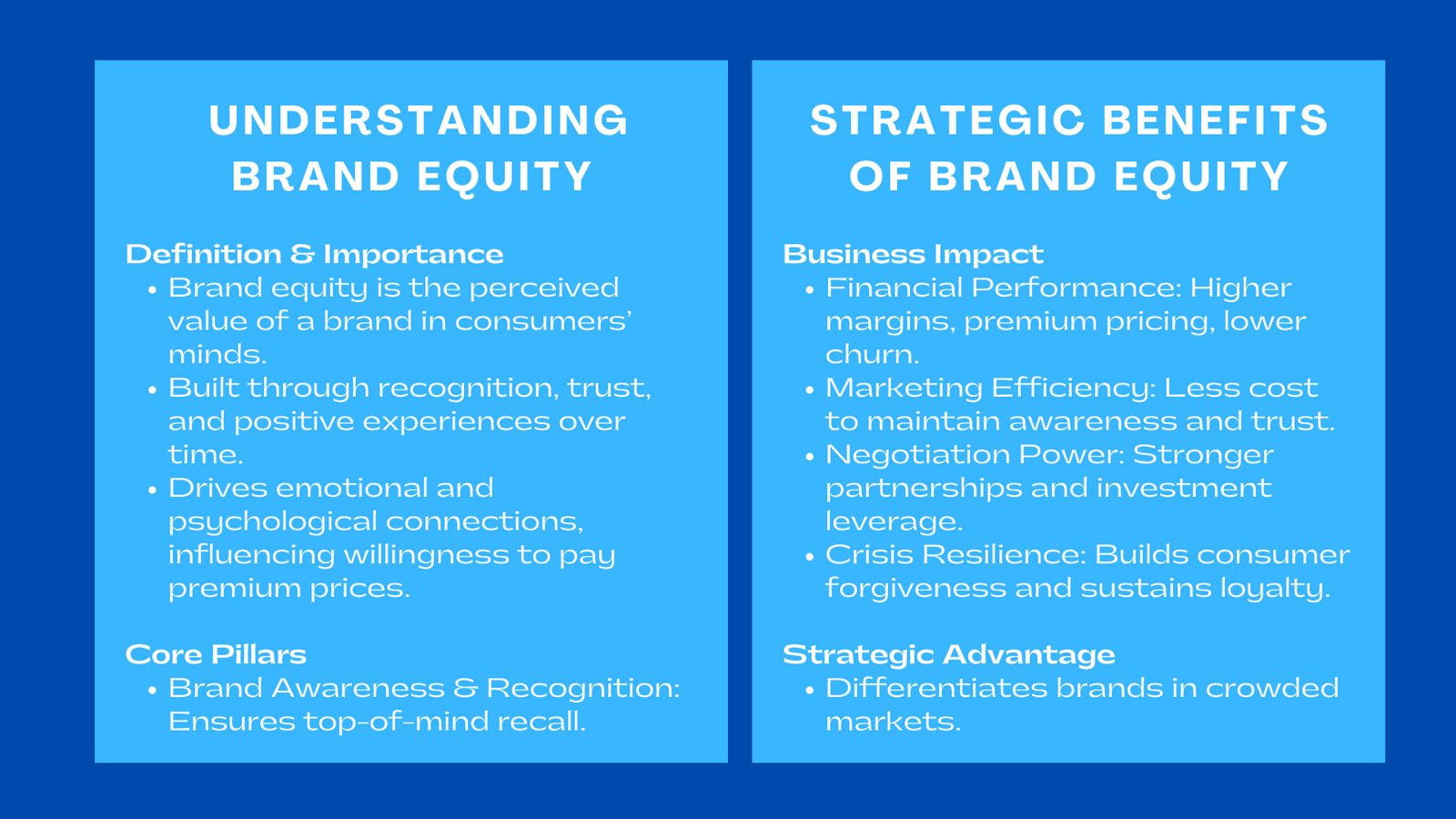
Brand equity is one of the most precious intangible assets that a company can own. It represents the perceived value of the brand in consumers’ minds, built through years of recognition, trust, and positive experiences. When customers are willing to pay more for a product simply because of its name or logo, this is brand equity in action. It’s not just about the product itself—it’s about the emotional and psychological relationship consumers form with the brand.
A strong brand creates more than just a transaction; it builds an identity that resonates deeply with its audience. Every positive experience adds another layer to this equity, while every broken promise chips away at it. This makes brand equity a living entity—constantly shaped by perception, performance, and purpose.
High brand equity signifies increased customer loyalty, the ability to charge premium prices, and sustained business growth. It is cultivated over time through consistent messaging, reliable product or service delivery, and meaningful emotional connections. Companies such as Apple, Nike, and Coca-Cola are classic examples of brands with exceptionally strong equity. These global leaders leverage their brand power not only to build customer trust but also to influence purchasing decisions, command market share, and drive innovation.
In today’s highly competitive environment, brand equity is more than a theoretical concept—it is a critical business driver that influences the strategic importance of brand equity in driving business growth and competitive advantage Singapore decision-making across all levels. From guiding marketing campaigns and product pricing to shaping customer engagement initiatives, brand equity defines how a company is perceived in the market and determines its long-term viability. By consistently investing in the development and preservation of strong brand equity, organizations can ensure resilience, profitability, and an enduring emotional connection with their customers.
Beyond its marketing benefits, brand equity also plays a key role in corporate reputation and stakeholder relationships. It affects how investors, partners, and even employees perceive a company’s credibility and stability. As markets evolve, businesses that understand and manage their brand equity strategically will find themselves better positioned to navigate disruption, capture opportunities, and foster long-term success.
Building Brand Equity: The Core Pillars
Brand Awareness and Recognition
The foundation of brand equity lies in brand awareness—the degree to which consumers can recognize and recall a brand. Awareness ensures that when customers are ready to purchase, your brand is top of mind. It’s built through strategic communication, consistent visual identity, and repetitive exposure across multiple channels. Just as companies often seek brand valuation services in Singapore to understand their market value, building strong brand awareness ensures that your brand is recognized, trusted, and remembered by consumers when it matters most.
Strong brand awareness establishes familiarity, and familiarity breeds trust. This psychological familiarity often influences consumer choice, even when competitors offer similar quality or pricing. Whether it’s the iconic Apple logo or Nike’s “Just Do It” slogan, powerful brand cues create recognition that transcends product categories and cultures.
Furthermore, building awareness goes beyond simple visibility—it’s about creating mental availability. Consumers should not only recognize your brand but associate it with a specific need or emotion. Consistent storytelling across social media, advertising, and customer interactions reinforces this connection, ensuring your brand stays embedded in consumers’ memory when decision moments arise.
Perceived Quality and Trust
Perceived quality refers to the consumer’s judgment about a product’s overall excellence relative to alternatives. It is not solely based on tangible features but also on emotional and symbolic factors such as reputation, reliability, and user experience.
A brand perceived as high quality commands consumer confidence, allowing it to charge premium prices and maintain loyalty even in competitive markets. For example, Toyota and Mercedes-Benz are both associated with reliability and performance—attributes that sustain customer trust and strengthen brand equity over time.
Trust is earned through consistency. When a brand continuously meets or exceeds expectations, customers internalize this reliability, making it harder for competitors to sway them with lower prices or newer features. Consistency across all brand touchpoints—from product performance to post-purchase service—reinforces the belief that the brand always delivers on its promises. Over time, this trust evolves into an unspoken contract between the company and its customers.
Brand Associations and Emotional Connection
Brand associations form the emotional and cognitive connections between a brand and the values or experiences that consumers identify with. These associations—whether linked to innovation, sustainability, exclusivity, or social responsibility—help differentiate a brand in saturated markets.
For instance, Patagonia is not just known for outdoor gear; it’s associated with environmental activism and ethical business. This alignment between brand and consumer values builds emotional attachment, transforming customers into advocates. The stronger these associations, the deeper the brand equity.
Emotional connection also enhances brand resilience. When customers feel emotionally aligned with a brand’s purpose or story, they are more forgiving during downturns or product missteps. These deep-rooted associations turn transactional relationships into enduring partnerships—where the brand represents identity, aspiration, and belonging.
Customer Loyalty and Advocacy
Customer loyalty is the ultimate expression of brand equity. It represents not only repeat purchases but also emotional commitment, where customers actively recommend and defend the brand. Loyalty reflects a long-standing relationship built on consistent satisfaction, trust, and perceived value.
Loyal customers are also more forgiving of mistakes, giving brands room to recover from missteps without losing credibility. This resilience is one of the most valuable benefits of strong brand equity. Moreover, loyal customers act as brand ambassadors, spreading positive word-of-mouth and attracting new audiences organically—one of the most powerful and cost-effective forms of marketing.
In the age of digital connectivity, advocacy has become even more influential. Reviews, testimonials, and social media recommendations amplify brand reputation, creating community-driven credibility that paid advertising can’t replicate. A loyal customer base is, therefore, not just a revenue source—it’s a brand’s most persuasive marketing force.
Evolving with Consumer Needs
To sustain brand equity, companies must evolve with consumer expectations. This involves continuous listening, innovation, and adaptation. Brands that remain static risk losing relevance, while those that anticipate change maintain leadership.
By combining consistent delivery with adaptive storytelling, companies can strengthen their brand’s emotional resonance while keeping it relevant in fast-changing markets. When these elements—awareness, quality, association, and loyalty—work together seamlessly, they form a powerful brand ecosystem capable of generating long-term value.
Today’s consumers expect brands to reflect their lifestyles, values, and aspirations. Therefore, staying attuned to emerging trends, such as sustainability, personalization, and inclusivity, is vital for keeping brand equity alive and meaningful in a constantly shifting landscape.
The Business Impact of Strong Brand Equity
Driving Financial Performance and Profitability
Strong brand equity directly contributes to financial performance. A well-established brand reduces marketing costs, increases customer retention, and improves margins by allowing premium pricing.
For example, Starbucks can sell coffee at higher prices because customers associate the brand with experience, community, and quality. This price elasticity is a testament to how brand equity creates tangible financial advantages. Additionally, companies with strong brands experience lower churn rates, higher lifetime customer value, and greater profitability.
Investors and analysts often view brand equity as a key indicator of enterprise value. Brands with high equity enjoy stronger stock performance, better market capitalization, and enhanced acquisition potential. From a corporate perspective, it is not just a marketing achievement—it is a measurable financial asset that boosts shareholder confidence and long-term valuation.
In fact, leading global corporations now include brand valuation as a core part of their annual reporting. A strong brand contributes significantly to enterprise worth, often exceeding the value of physical assets. It’s proof that in a world driven by perception, brand reputation can translate directly into financial power.
Reducing Marketing Costs and Increasing Efficiency
Brand equity acts as a marketing multiplier. Once a brand becomes well-known and trusted, it requires less investment to maintain awareness or persuade customers to buy. The brand’s reputation and emotional connection do much of the work organically.
For instance, when a brand achieves top-of-mind awareness, new campaigns can focus on reinforcing loyalty rather than rebuilding recognition. This efficiency leads to significant cost savings and allows companies to allocate resources toward innovation and expansion instead of constant awareness-building.
Furthermore, customers who already trust a brand need less convincing. They are more likely to engage with content, respond to promotions, and forgive occasional missteps, reducing the cost and complexity of marketing initiatives over time.
Enhancing Negotiation Power and Business Partnerships
Another key advantage of brand equity lies in negotiation leverage. Distributors, suppliers, and partners are more inclined to collaborate with strong brands that carry established credibility and loyal customer bases. This negotiating power extends across the supply chain and helps secure favorable deals, exclusive partnerships, and priority access to new markets.
During mergers and acquisitions, brand equity often represents a large portion of the purchase price. A brand that commands consumer trust can significantly increase the overall valuation of a business, making it a strategic asset during investment and expansion negotiations.
In global markets such as Singapore—where competition and innovation move rapidly—brand equity acts as a business passport, opening doors to joint ventures, collaborations, and cross-industry partnerships that accelerate growth.
Crisis Resilience and Consumer Forgiveness
Strong brand equity provides a cushion during crises. When trusted brands face setbacks—such as product recalls, negative publicity, or service issues—consumers are generally more forgiving. This “equity shield” allows companies to recover faster and retain customer loyalty even after mistakes.
A powerful example of this resilience can be seen in Johnson & Johnson’s handling of the Tylenol crisis, where transparent communication and ethical action reinforced consumer trust. The company’s pre-established equity transformed potential disaster into long-term loyalty, proving that brand strength extends far beyond marketing—it safeguards reputation and business continuity.
This resilience is especially valuable in the digital age, where consumer opinions spread instantly. A trusted brand, built over years of consistent value delivery, can weather such storms far more effectively than an unknown or inconsistent one.
Strategic Competitive Advantage
Ultimately, brand equity forms the foundation of sustainable competitive advantage. It differentiates companies in crowded markets, attracts top talent, and creates emotional barriers that competitors find hard to penetrate. Brands with strong equity become symbols of value and reliability, influencing purchasing decisions across demographics and geographies.
In Singapore’s competitive business landscape, understanding the importance of brand equity in driving business growth and customer loyalty is crucial. Companies that master this dynamic can outlast market fluctuations, dominate categories, and expand globally with credibility and confidence.
Strong brand equity ensures that even as trends shift, your brand remains timeless—anchored in trust, driven by consistency, and powered by emotion.
Conclusion to What is Brand Equity and Why Its Key to Business Success
Brand equity is not built overnight—it is cultivated through years of authenticity, consistency, and unwavering focus on customers. It defines how a business is perceived by the market and influences every decision a consumer makes about whether to engage, purchase, or recommend.
Over time, consistency translates into credibility, trust, and preference—the essential pillars of strong brand equity. Positive perception encourages not only repeat purchases but also organic advocacy, where how to build long-term brand equity through customer trust and consistency Singapore customers become loyal ambassadors who influence others. This advocacy holds more power than any paid campaign because it stems from genuine satisfaction and belief in the brand.
Ultimately, brand equity is the foundation of sustainable success. It turns products into experiences, customers into advocates, and businesses into cultural icons. When carefully nurtured through authenticity, customer-centricity, and consistent value delivery, brand equity becomes an enduring competitive advantage—one that not only drives short-term sales but also ensures long-term corporate growth, relevance, and leadership in an ever-evolving global marketplace.