Strategic Brand Planning Using Valuation Insights
Introduction to Strategic Brand Planning Using Valuation Insights
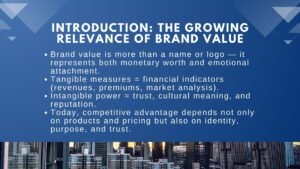
In a business environment where competition increasingly revolves around intangible strength rather than physical scale, the ability to measure, interpret, and strategically deploy brand value has become indispensable. Brands function as economic engines capable of enhancing market positioning, improving revenue sustainability, and shaping the perceptions of investors, employees, regulators, and consumers alike. The challenges of globalization, rapid digital transformation, and constantly shifting customer expectations have made traditional planning approaches insufficient. Companies now require deeper, richer, and more analytically precise insights to guide strategic direction. This is precisely where brand valuation emerges as a critical, sophisticated capability. With accurate brand planning valuation insights, organizations gain a clear understanding of the economic and strategic weight their brands hold within competitive landscapes. These insights enable leadership to make well-supported decisions, prioritize investments, mitigate risks, and construct resilient long-term strategies. In this sense, brand valuation becomes an essential form of brand strategy decision support, transforming abstract brand perceptions into measurable and actionable strategic intelligence.
The Strategic Purpose of Brand Valuation in Corporate Planning
Elevating Valuation to a Continuous Strategic Discipline
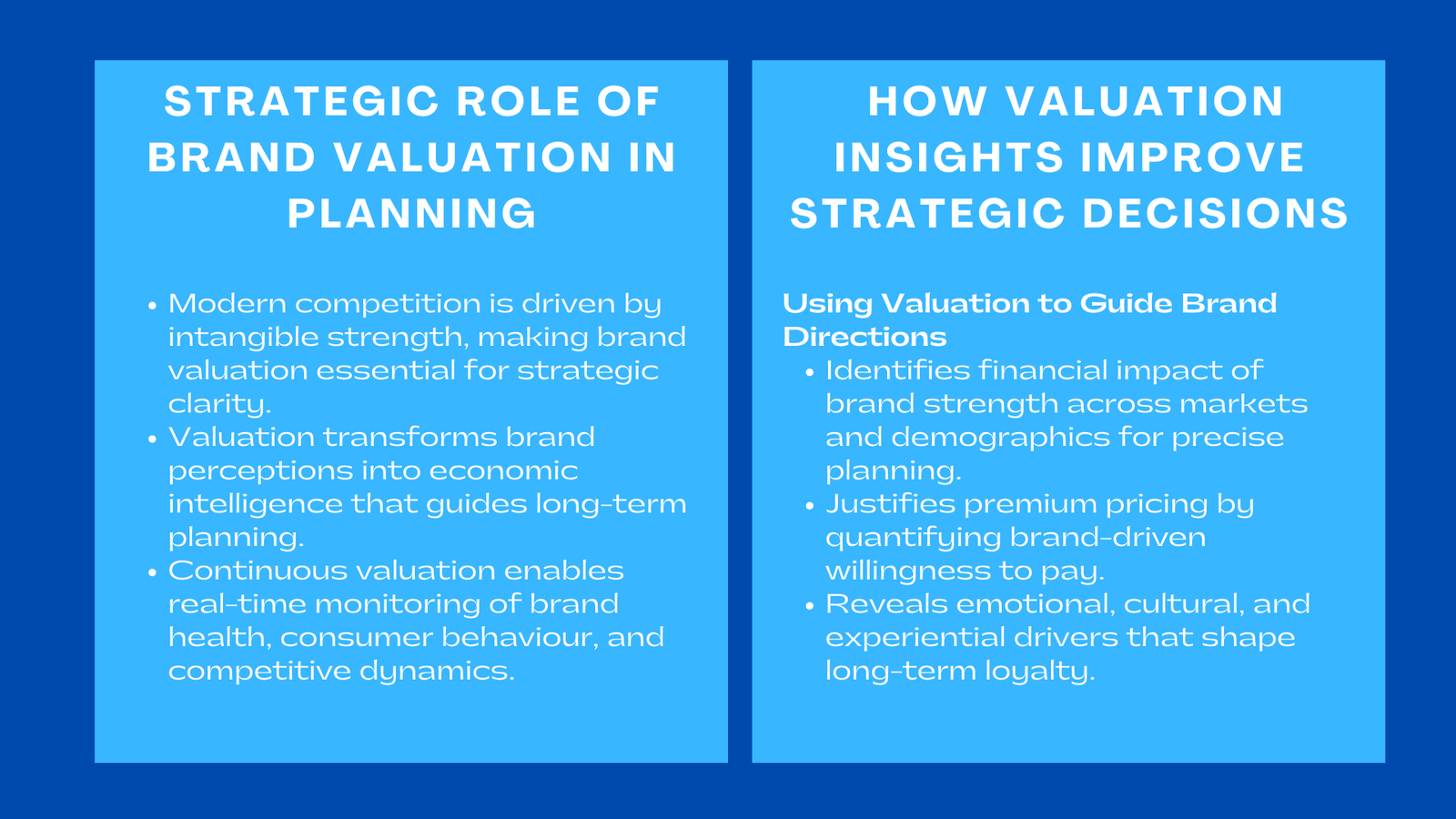
The most significant shift in the modern understanding of brand valuation is the movement away from viewing it as a periodic or transactional necessity and instead recognizing it as a continuous strategic discipline. Forward-looking organizations no longer reserve valuation for mergers, acquisitions, or financial reporting cycles. Instead, they deploy valuation insights throughout the year to monitor brand health, refine business forecasts, and assess strategic readiness. This ongoing application enables companies to capture real-time evolutions in consumer sentiment, digital engagement, market volatility, and competitor behaviour. As brand ecosystems become more dynamic, companies that continuously leverage valuation insights remain more agile, informed, and prepared to seize emerging opportunities.
Creating a Shared Strategic Language Across the Organization
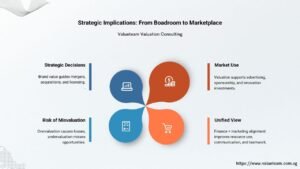
Brand valuation provides a unified language that bridges traditionally disconnected functions such as marketing, finance, operations, human resources, and executive leadership. Strategic misalignment often occurs because these departments use different metrics to evaluate success. Marketing may prioritize awareness, finance may focus on earnings, and operations may emphasize efficiency. Valuation integrates these diverse lenses into a single coherent framework by connecting brand health with financial outcomes, operational implications, and consumer expectations. This convergence allows the entire organization to collaborate more effectively and channel its collective efforts toward strengthening brand equity and achieving strategic coherence.
How Valuation Insights Transform Brand Planning
Illuminating the Financial Impact of Brand Strength Across Segments
Brand valuation reveals how the brand influences revenue, profit margins, customer loyalty, and willingness to pay across different segments and geographies. This nuanced understanding allows companies to tailor strategies with precision. A brand may be exceptionally strong in one region while struggling in another, or it may perform well within certain demographic groups but require repositioning for others. Valuation uncovers these patterns by linking behavioural insights to economic outcomes. Through these brand planning valuation insights, leadership can identify where brand investment yields the highest returns and where strategic adjustments are necessary to sustain relevance.
Supporting Long-Term Price Positioning and Premium Justification
Price is not merely a function of cost or supply and demand; it is deeply tied to brand equity. Valuation assesses how much of the price premium customers are willing to pay is attributable to the brand itself. This is crucial in strategic planning because premium strength correlates directly with resilience during economic downturns, competitive pressures, or category disruptions. Valuation insights help companies determine whether their pricing strategies are stretching the brand’s perceived value or leaving potential margin opportunities untapped. Over time, this understanding influences product positioning, promotional intensity, and decisions about premium or value-tier extensions.
Revealing the Emotional, Cultural, and Experiential Drivers of Long-Term Equity
Brand valuation incorporates qualitative data—such as emotional affinity, identity fit, cultural relevance, and experiential satisfaction—into quantitative modeling frameworks. These intangible drivers are especially important because they determine long-term loyalty and advocacy. Companies that understand which emotional connections matter most to their customers can craft more resonant messages, refine experiential touchpoints, and strengthen their role within cultural or social contexts. This fusion of qualitative and quantitative data gives organizations a holistic view of brand performance and guides planning in a way that aligns with deep-seated customer motivations.
Using Valuation Insights to Guide Strategic Brand Investments
Identifying the True Catalysts of Growth Through Valuation Diagnostics
Valuation functions as a diagnostic tool, identifying which elements of the brand are acting as growth engines and which may be inadvertently constraining market performance. These growth catalysts may include the brand’s heritage, innovation reputation, sustainability positioning, customer experience, convenience, or emotional resonance. By isolating the variables that contribute most to brand value, organizations can channel investments into areas that directly enhance long-term competitiveness. This targeted allocation maximizes impact, reduces waste, and ensures strategic decisions align with brand strengths.
Aligning Innovation Pipelines With the Brand’s Strategic Trajectory
Innovation often fails not because the product is flawed but because it does not align with the brand’s perceived role or identity. Valuation clarifies what the brand stands for and how far it can stretch into adjacent categories. Through scenario analysis and brand elasticity assessments, evaluation teams determine whether new products reinforce or dilute the brand’s equity. These insights help companies structure innovation roadmaps that enhance the brand’s long-term value rather than fragmenting or confusing its strategic direction.
Strengthening Market Expansion Strategies With Brand Equity Mapping
Whether entering new countries, categories, or demographic segments, companies must know how portable their brand equity is. Valuation provides a detailed assessment of the brand’s familiarity, relevance, trustworthiness, and differentiation in new environments. These insights guide decisions about whether to launch under the global master brand, localize branding elements, or create hybrid positioning models. Accurate market expansion planning depends on understanding how the brand will be perceived and what adjustments are necessary to ensure acceptance and competitiveness.
Deepening Strategic Positioning Through Valuation-Driven Insights
Building Scenario-Based Plans to Navigate Future Market Conditions
Modern markets are characterized by uncertainty, from economic shifts and political events to digital disruptions and cultural changes. Valuation models incorporate scenario forecasting that evaluates how the brand’s value might evolve under varying conditions. These scenarios empower companies to build resilient long-term plans that anticipate downturns, capitalize on emerging trends, and safeguard equity during crises. When used as a strategic planning tool, valuation transforms uncertainty from a risk into a source of competitive insight.
Reinforcing Competitive Differentiation Through Positioning Insights
Valuation examines how strongly the brand stands out in crowded marketplaces. This includes assessing differentiation based on emotional positioning, product superiority, customer experience excellence, or category disruption. Insights into differentiation help companies refine their brand promise, articulate clearer value propositions, and amplify the attributes that make them distinctive. Strategic planning becomes sharper and more grounded when differentiation is understood through both financial and perceptual lenses.
Strengthening Employee Alignment Through Internal Brand Valuation Awareness
Employees play a central role in shaping the brand experience. Valuation insights reveal how well internal behaviours reflect the brand promise and how internal culture influences brand strength. This understanding encourages organizations to integrate brand values into employee training, leadership development, and performance metrics. As internal alignment increases, the brand becomes more consistent, authentic, and credible across every customer interaction.
Embedding Valuation Into Corporate Governance and Leadership Decisions
Supporting Executive Decision-Making With Tangible Brand Intelligence
Executive teams must balance short-term pressures with long-term brand-building needs. Valuation provides tangible intelligence that helps leaders justify strategic decisions, defend investment priorities, and consider trade-offs with clarity. When brand value is quantified and tracked over time, leadership gains confidence in decisions that promote long-term brand health—even when such decisions require near-term sacrifices. Valuation thus strengthens governance by establishing accountability frameworks grounded in measurable outcomes.
Enhancing Shareholder Confidence Through Transparent Intangible Asset Reporting
In capital markets increasingly dominated by intangible-heavy companies, investors seek visibility into how brand equity contributes to performance. Valuation provides a defensible, transparent foundation for shareholder communication. When companies explain how brand decisions influence value creation, investors interpret future prospects with greater confidence. This transparency reduces volatility, enhances trust, and positions the company as a disciplined steward of intangible capital.
Building Long-Term Organizational Resilience Through Insight-Driven Risk Management
A brand’s value is sensitive to reputational events, societal expectations, technological disruptions, and competitive shocks. Valuation highlights the areas where the brand is most vulnerable and provides early warning indicators that allow companies to implement proactive interventions. These insights reinforce risk management frameworks, enabling organizations to preserve equity and protect their market position when challenged by unexpected developments.
Conclusion
Brand valuation has evolved into one of the most powerful strategic tools available to modern organizations. It transforms the abstract concept of brand equity into a precise and actionable form of intelligence that informs long-term planning, investment decisions, innovation strategies, competitive positioning, and governance structures. With strong brand planning valuation insights, companies gain the clarity needed to pursue strategies that reinforce brand strength while advancing corporate objectives. As a sophisticated form of brand strategy decision support, valuation empowers leadership to make decisions that are both visionary and rooted in measurable economic impact. In a marketplace defined by rapid change and intense competition, organizations that embed valuation insights into their planning processes position themselves for sustainable growth, enduring relevance, and resilient long-term value creation.