Measuring Brand Strength: Tools and Metrics You Should Know
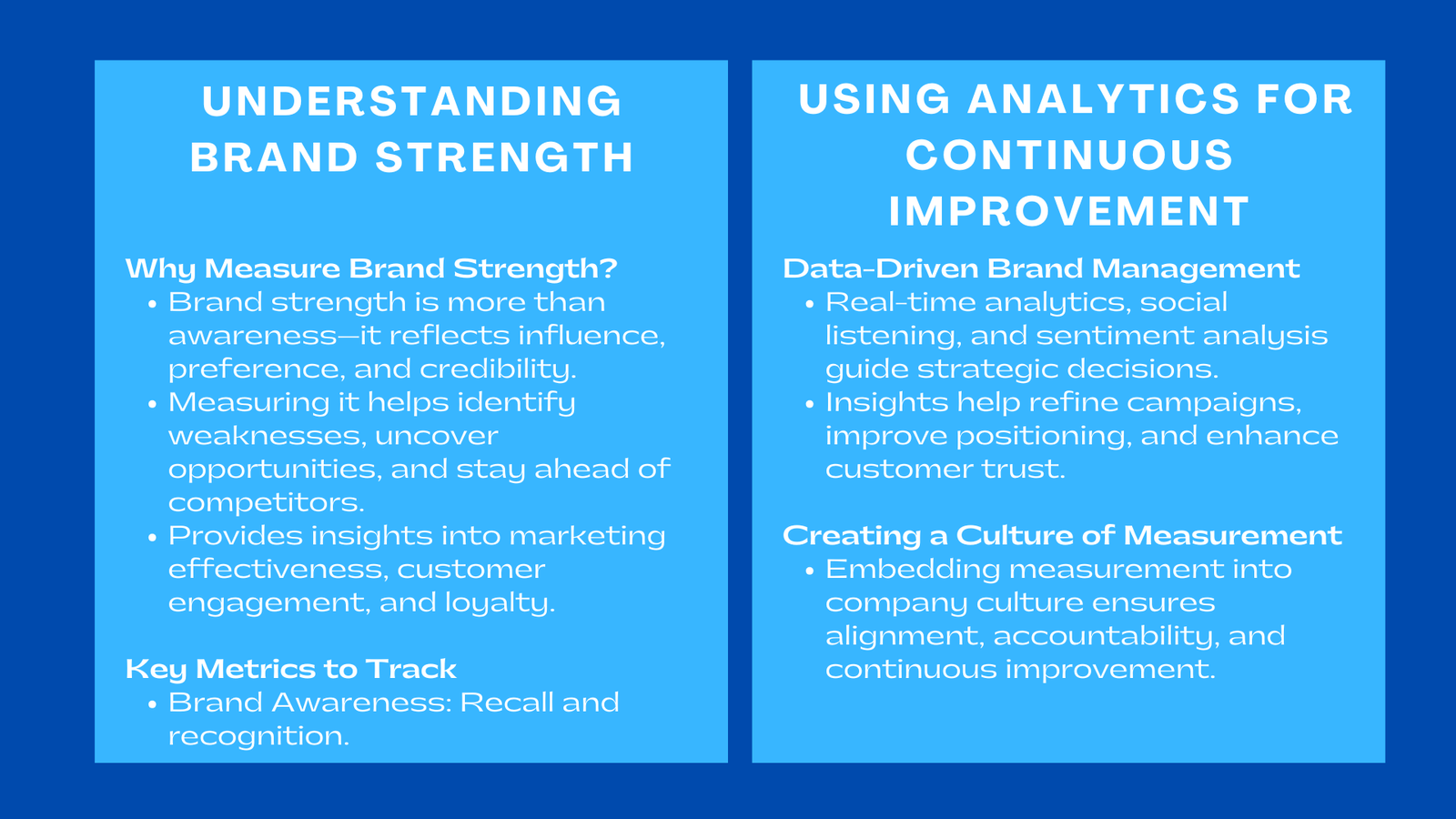
Every business wants to have a strong brand, but few measure it in any systematic way. Brand strength is not just about awareness; it’s about influence, preference, and credibility. Measuring it helps organizations understand their true position in the market, identify weaknesses, and uncover new opportunities for growth. A well-measured brand is one that can adapt, evolve, and stay ahead of the competition. By quantifying brand performance, businesses gain visibility into how their marketing and customer engagement strategies are truly impacting perception and loyalty.
Effective brand measurement provides invaluable insights into how a brand performs across key dimensions such as visibility, reputation, customer loyalty, and competitive standing. It also enables companies to track how their branding efforts translate into tangible business outcomes over time. With clear metrics in place, businesses can evaluate whether their strategies are strengthening customer relationships or diluting their brand identity. In many cases, brand measurement becomes the compass that directs marketing investments, product positioning, and communication tone— how to evaluate brand strength using analytics tools helping organizations achieve better alignment between what they promise and what consumers experience.
Brand measurement also helps executives make data-driven decisions related to marketing spend, reputation management, and product development. Without clearly defined metrics, companies are running on intuition rather than intelligence and could be functioning inefficiently and inconsistently. Relying solely on gut feeling or anecdotal feedback makes it difficult to identify underlying issues or growth opportunities. Instead, consistent measurement transforms branding from an art form into a blend of creativity and science—allowing leaders to link emotional resonance with quantifiable business impact.
Moreover, brand measurement empowers executives to make data-driven decisions in critical areas such as marketing investment, reputation management, and product development. Instead of relying on assumptions, companies can base their decisions on quantifiable insights that reveal what truly drives brand value. Without a clear measurement framework, even well-intentioned branding initiatives risk becoming inefficient, inconsistent, or misaligned with business goals—ultimately weakening a company’s competitive edge in the long run. A strong measurement system functions as a feedback loop, enabling teams to adapt swiftly and remain relevant as customer preferences, technologies, and market dynamics evolve.
When done effectively, measuring brand strength serves as both a diagnostic and strategic tool. It provides the clarity needed to realign marketing efforts, refine positioning, and reinforce customer trust—all of which are essential for sustainable growth and long-term brand leadership. The ability to see beyond surface-level success—such as short-term sales spikes—and evaluate deeper indicators like brand perception and advocacy allows businesses to build a brand that lasts.
Key Metrics for Assessing Brand Strength
Brand Awareness Metrics: Recall and Recognition
There are various tools and indexes that are useful in the measurement of brand strength. Brand Awareness Metrics, such as recall and recognition, measure how well consumers know your brand and can identify it among competitors. Awareness is often considered the first layer of brand equity—it ensures that your company appears in the consumer’s mind when a purchasing decision arises. It represents visibility, familiarity, and top-of-mind presence—the foundation upon which emotional connection and preference are later built. Companies often complement these insights with brand equity valuation and brand valuation methodology Singapore to quantify the financial and strategic value of their brand, ensuring that marketing efforts are aligned with measurable business impact.
High awareness not only drives visibility but also builds familiarity, which directly influences trust and choice. The more often consumers encounter your brand in meaningful contexts, the more likely they are to perceive it as reputable and credible. Tracking awareness trends over time reveals how effectively marketing efforts are capturing attention and sustaining relevance. Furthermore, breaking awareness down by market segment or channel helps identify which audiences resonate most with the brand message, allowing for more precise targeting and investment.
Brand Perception Surveys: Understanding Consumer Mindsets
Brand Perception Surveys chart customer perceptions of values or attributes that are linked to the brand. They help businesses identify how well their brand identity aligns with public sentiment and expectations. These surveys act as mirrors, reflecting how consumers actually interpret the brand’s promise and whether it lives up to expectations.
Brand Perception Surveys go a step further by evaluating how consumers perceive the brand’s values, personality, and key attributes. These insights reveal whether the brand’s intended image aligns with actual customer sentiment. For example, if a company aims to be seen as innovative but customers associate it with tradition, this discrepancy highlights an opportunity to refine messaging or product presentation. Such perception analysis is crucial for identifying misalignments between internal branding and external reputation.
These surveys are crucial in markets like Singapore, where subtle cultural and behavioral nuances influence consumer trust and preference. Understanding these nuances enables companies to adapt branding efforts that resonate authentically with their target demographics. Regularly conducting perception studies ensures that a brand’s emotional appeal evolves with consumer expectations—maintaining both relevance and authenticity.
Net Promoter Score (NPS): Gauging Customer Advocacy
Meanwhile, the Net Promoter Score (NPS) has become a powerful metric for gauging customer advocacy and satisfaction. By measuring the likelihood of customers recommending a brand to others, NPS provides a clear reflection of brand loyalty and emotional connection. It moves beyond satisfaction and focuses on enthusiasm—the difference between a customer who merely buys and one who advocates.
A high NPS indicates not only satisfaction but deep trust—consumers who recommend a brand are effectively acting as voluntary ambassadors. Tracking changes in NPS over time allows companies to assess whether their engagement strategies are fostering genuine enthusiasm or merely transactional relationships.
In addition, monitoring NPS segmentation across markets or demographics can uncover hidden patterns—for example, identifying which customer segments are most passionate about the brand and which require renewed engagement efforts. For instance, an NPS that varies significantly between regions may indicate cultural differences in perception or service delivery that need attention.
Share of Voice (SOV) and Engagement Rates
In addition, metrics such as Share of Voice (SOV) and Engagement Rates offer valuable perspectives on a brand’s competitive position and digital influence. A higher SOV indicates that a brand dominates industry conversations, while strong engagement metrics signal meaningful interaction with audiences across digital platforms.
SOV measures how visible your brand is compared to competitors within media and digital spaces. When coupled with engagement metrics, it paints a complete picture of brand relevance and resonance. A brand may have visibility, but without engagement, it lacks connection—and connection is the true currency of modern marketing.
Monitoring SOV also helps organizations evaluate the ROI of campaigns, refine content strategies, and identify which communication channels are most effective for building presence and credibility. This ongoing monitoring allows marketing teams to pivot resources toward channels that yield the highest audience interaction and return on investment.
Brand Equity Valuation Models
From a financial perspective, Brand Equity Valuation Models—such as those developed by Interbrand or BrandZ—attempt to put the business value created by the brand into a monetary figure. These models combine various pieces of data related to financial performance, customer perception, and market competitiveness to provide a comprehensive view of brand health.
Brand valuation transforms brand equity from an abstract concept into a tangible asset. It quantifies the contribution of branding to total enterprise value, helping investors, analysts, and executives justify strategic decisions such as mergers, acquisitions, and licensing. This financial lens allows companies to see branding not merely as a marketing function but as an investment with measurable returns.
In markets like Singapore, where global investors prioritize transparency and governance, a clear brand valuation report signals maturity, professionalism, and long-term growth potential. It also strengthens negotiation positions in partnerships and capital markets, further highlighting branding’s strategic role in corporate valuation.
Using Analytics for Continuous Improvement
The Power of Real-Time Data
Today’s analytics platforms offer real-time information about brand performance, enabling businesses to make faster, smarter, and more informed decisions. Tools for social listening allow companies to monitor public sentiment and track how consumers feel about their brand, products, and competitors across multiple channels.
These platforms can detect subtle sentiment shifts—positive, neutral, or negative—helping organizations respond promptly to emerging issues or capitalize on moments of positive engagement. For instance, a sudden rise in online mentions could indicate viral traction or a potential PR risk; data analytics helps brands act decisively rather than reactively. Proactive monitoring ensures that companies can safeguard their reputation while identifying new opportunities for engagement.
Social Listening and Sentiment Analysis
As a result, tools for social listening can provide sentiment insights, while analytics such as Google Trends and SEO tracking help assess visibility and prominence over time. They provide valuable data on search interest, keyword relevance, website traffic, and audience behavior, which can be used to evaluate how effectively the brand captures consumer attention in the digital space.
These tools not only quantify visibility but also reveal emotional tone—how people feel about the brand. This emotional dimension is crucial since consumer perception often drives purchase intent more powerfully than product features. Sentiment analysis also enables brands to understand emerging narratives in their market, helping them craft content that aligns with public discourse and values.
By integrating sentiment data with engagement metrics, companies can pinpoint exactly what drives positive brand associations and where improvements are needed. This integrated approach helps transform raw data into actionable insights that directly influence marketing strategy and product innovation.
Leveraging Data for Strategic Decisions
Utilization of these data-driven brand measurement strategies for business growth Singapore in the strategic planning process ensures that brand decisions are informed and evidence-based. In essence, modern analytics transform brand management from a reactive process into a proactive, intelligence-driven strategy—where every decision, campaign, and investment is supported by measurable performance indicators and continuous learning.
Brands that integrate analytics into their strategic framework develop a competitive advantage through precision and agility. They can identify emerging trends before competitors, tailor campaigns based on consumer behavior, and allocate budgets toward initiatives with proven impact. Data-driven agility ensures that branding remains relevant even as market conditions fluctuate rapidly.
Creating a Culture of Measurement
The most successful organizations go beyond using analytics tools—they embed measurement into their culture. Every department, from marketing to product development, contributes data that builds a unified view of brand performance. This cross-functional approach ensures alignment and accountability, transforming measurement into a continuous improvement cycle rather than an annual audit.
By treating data as a strategic asset, companies move from intuition-based branding to performance-driven brand leadership. When measurement becomes cultural rather than procedural, it fosters an environment of learning, innovation, and consistent excellence that sustains long-term growth.
Conclusion to Measuring Brand Strength Tools and Metrics You Should Know
It is crucial to measure the strength of a brand in order to achieve long-term growth and leadership in the market. By combining quantitative metrics—such as awareness scores, customer loyalty indices, and engagement rates—with qualitative insights like sentiment analysis, customer feedback, and perception studies, companies can gain a holistic understanding of how their brand is perceived and how that perception influences business performance.
When brands follow and take action based on these insights, they sharpen strategy, increase engagement, and build trust. To develop a means of continuous data-driven brand measurement strategy for business growth Singapore measurement is to transform branding from a static discipline into a dynamic system of intelligence—one that fuels smarter positioning, faster adaptation, and greater market resilience.
Ultimately, developing a system of continuous brand measurement empowers organizations to evolve intelligently and proactively. It enables brands to make data-backed decisions, optimize positioning, and maintain resilience in dynamic markets. Over time, this commitment to insight-driven brand management becomes a competitive differentiator—one that turns measurement into momentum and perception into sustainable market influence.
When brand measurement becomes an ongoing discipline rather than a periodic exercise, it unlocks a feedback loop of growth: insights inform strategy, strategy drives performance, and performance strengthens perception. This cycle is what defines the world’s most enduring brands—those that measure not just what they do, but how they are truly perceived. Through this continuous loop of insight and improvement, brand measurement becomes not just a management practice but a strategic advantage that drives long-term excellence.