Measuring Brand Equity for Strategy Decisions
In the contemporary business landscape—an environment marked by constant innovation, accelerating digital transformation, and unprecedented shifts in consumer behavior—brand equity has become one of the most critical strategic assets an organization can possess. Unlike physical assets that depreciate over time or technological advantages that competitors can easily replicate, a strong brand grows more influential as awareness, trust, and emotional connection deepen. This makes brand equity a unique form of long-term value that enhances organizational resilience, amplifies differentiation, and creates lasting customer loyalty. Companies increasingly recognize that brand equity influences every dimension of business—from customer acquisition and retention to pricing strategies, negotiation power, market entry speed, and partnership opportunities. Because competition is no longer defined solely by product superiority but by emotional resonance and trust, systematically understanding brand equity is essential for sustaining relevance in a noisy and crowded marketplace.
As business ecosystems evolve, the need for objective and quantifiable brand equity measurement has grown significantly. Traditional decision-making models that relied on intuition, internal assumptions, or surface-level indicators such as awareness are no longer adequate. The rise of data analytics, AI-driven insights, and consumer intelligence platforms has enabled companies to measure brand performance with a level of precision that was previously impossible. This shift has redefined how organizations approach brand equity strategy analysis, transforming it from a conceptual exercise into a disciplined analytical process. By quantifying how consumers perceive the brand, how the brand influences financial performance, and how its competitive strength evolves over time, organizations can make strategic decisions that are anchored in robust evidence rather than subjective impressions. The more complex and competitive the market becomes, the more essential it is for companies to embed brand equity measurement into their operational and strategic planning frameworks.

The Strategic Importance of Measuring Brand Equity
Understanding How Brand Equity Influences Corporate Growth
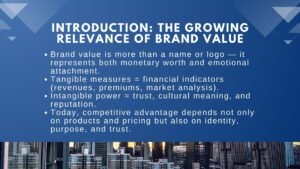
Brand equity is a major driver of corporate growth because it shapes how consumers interpret value in a marketplace filled with choices. A strong brand reduces decision fatigue for customers, making it more likely that they will choose a familiar name rather than experimenting with alternatives. This preference has far-reaching implications. It lowers acquisition costs by reducing the burden on promotional efforts, because consumers willingly choose the brand without needing heavy persuasion. It enhances retention because emotional attachment and trust form psychological bonds that competitors struggle to break. It increases customer lifetime value, as loyal customers tend to purchase more frequently, upgrade more willingly, and advocate more passionately. Furthermore, strong brand equity enhances pricing power, enabling companies to charge premium prices without sacrificing demand. This premium contributes to healthier margins and greater profitability. In essence, brand equity acts as a multiplier that amplifies the effectiveness of every other business function, making it indispensable for long-term growth, especially in strategic contexts where organizations seek support from business valuation Singapore expert services to quantify brand-driven performance more accurately.
Linking Brand Measurement to Decision-Making Structures
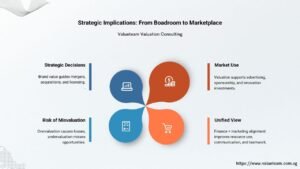
Integrating brand valuation for business planning into strategic frameworks elevates brand management from a marketing responsibility to a cross-organizational priority. When brand equity is measured and valued consistently, decision-makers gain clarity on how the brand contributes to current performance and how it is likely to influence future outcomes. This structured approach helps determine whether the brand positioning remains relevant, whether communication strategies need refinement, and whether innovation efforts align with consumer expectations. It also guides decisions related to mergers and acquisitions, as the value of a target brand must be assessed not solely from a financial perspective but also from a brand equity perspective. Measuring brand equity provides a common language that executives, marketers, investors, and analysts can use to make aligned decisions. This alignment minimizes strategic risk, strengthens execution, and ensures that organizational actions reinforce rather than weaken brand strength.
Brand Equity as a Driver of Corporate Strategy
How Brand Strength Shapes Competitive Positioning
Brand strength is one of the most powerful determinants of competitive positioning. In saturated markets where products offer similar functional benefits, the brand becomes the primary driver of differentiation. A strong brand signals reliability, credibility, and authenticity—qualities that influence consumer behavior even before product features are evaluated. Consequently, companies with strong brand equity can enter competitive categories with greater confidence, expand into adjacent segments more smoothly, and maintain a leadership position even when competitors attempt aggressive pricing or promotional tactics. By understanding the detailed components of brand equity, organizations can refine their positioning strategies to emphasize qualities that resonate most strongly with target customers. This deep understanding allows brands to defend their uniqueness, sharpen their value proposition, and cultivate consumer loyalty in ways that competitors cannot easily disrupt.
Translating Brand Insights into Strategic Actions
Once brand insights are thoroughly analyzed, organizations can convert them into specific strategies that enhance performance. These strategies may include refining brand identity, updating key messages to reflect evolving cultural values, strengthening customer experience touchpoints, or investing in new digital engagement platforms. Brand insights also inform portfolio strategy, helping companies decide whether to consolidate brands, introduce sub-brands, or sunset outdated identities. This analytical clarity ensures that every strategic action serves to strengthen the brand, reinforce consumer trust, and support long-term value creation. By translating insights into targeted actions, organizations can achieve greater coherence, consistency, and effectiveness across all brand-building activities.
Core Elements of Brand Equity Measurement
Consumer Perception as the Foundation of Brand Evaluation
Consumer perception forms the psychological foundation on which brand equity is built. It encompasses the emotions, associations, mental shortcuts, and expectations that consumers attach to a brand. Understanding perception involves analyzing factors such as trustworthiness, distinctiveness, relevance, cultural compatibility, and authenticity. Today’s companies utilize advanced tools—such as sentiment analysis algorithms, perception heatmaps, and psychometric studies—to examine how consumers perceive the brand at a deep and granular level. This insight helps companies identify critical areas for improvement, anticipate emerging trends, and understand what motivates consumers to engage with or disengage from the brand. Because perception often predicts behavior, measuring it accurately provides early indicators of future performance.
Market Performance as an Indicator of Brand Impact
Market performance reveals how effectively brand perception translates into actual behavior. High-equity brands typically demonstrate strong market penetration, robust purchase frequency, lower churn, and higher engagement across channels. Market performance metrics also reflect how well the brand withstands competition. For example, a strong brand may retain market share even when competitors introduce similar offerings or offer lower prices. Companies evaluate customer retention, repeat purchase rates, basket size, customer segmentation performance, and pricing elasticity to understand the commercial impact of brand equity. These metrics illuminate whether the brand’s perceived value aligns with its real-world performance and whether additional strategic actions are required to enhance market impact.
Financial Contribution as the Anchor of Brand Valuation
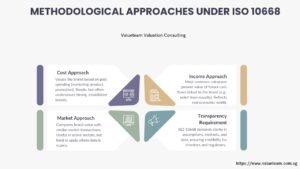
Financial contribution grounds brand equity in objective economic terms. Through brand valuation for business planning, organizations quantify the brand’s monetary impact by isolating the portion of cash flow, margin, or profit attributable to brand strength. Financial models such as price premium analysis, earnings attribution, and brand asset valuation help convert intangible perception into tangible value. This financial translation is essential for strategic planning, investment allocation, and corporate reporting. Companies that understand the financial contribution of brand equity can evaluate the ROI of brand-building investments, determine which brands in the portfolio deliver the highest value, and justify budget decisions with empirical evidence.
Using Brand Valuation for Business Planning
Integrating Valuation into Long-Term Corporate Roadmaps
Brand valuation functions as a strategic compass that guides long-term corporate planning. It enables organizations to forecast how brand strength will evolve under various scenarios—whether facing market volatility, competitive disruption, or shifts in consumer preferences. By incorporating brand valuation into roadmaps, companies can evaluate whether entering a new territory aligns with brand strength, whether launching a new product line complements the existing brand promise, or whether the brand architecture requires modification to support expansion. Valuation offers both a backward-looking assessment of historical performance and a forward-looking projection of brand potential, allowing companies to create more resilient, adaptive, and strategically aligned plans.
Aligning Value Drivers with Strategic Priorities
Understanding the drivers of brand value helps companies align strategic priorities across departments. If trust is the primary driver, then initiatives that strengthen transparency and brand integrity become essential. If emotional resonance drives value, then storytelling and experiential branding take precedence. If innovation is a major contributor, the company must ensure its product pipeline aligns with evolving consumer needs. This alignment ensures coherence across marketing, operations, product development, and leadership, creating a powerful and unified approach to brand building.
Enhancing Strategic Decision-Making Through Brand Insights
Strengthening Management Confidence Through Data-Backed Insights
Data-backed brand insights give executives confidence in making high-stakes decisions. Whether evaluating whether to reposition the brand, assessing a potential acquisition target, or determining the viability of entering a new market, brand insights provide clarity. They minimize strategic risk by revealing blind spots, confirming strengths, and identifying vulnerabilities that may not be apparent from financial analysis alone. These insights enhance the credibility of decisions presented to boards, investors, and internal teams, reinforcing the organization’s commitment to evidence-based planning.
Connecting Brand Value with Long-Term Corporate Performance
Brand equity signals the future direction of corporate performance, often before financial metrics reveal emerging trends. When organizations understand which drivers influence brand value—be it credibility, experience, or relevance—they can forecast how consumer behavior will shift. This ability to anticipate strengthens long-term planning, enhances resilience to disruption, and ensures that the organization remains aligned with consumer expectations even as markets evolve. Ultimately, brand value is a powerful predictor of competitive strength, revenue stability, and long-term profitability.
Conclusion to Measuring Brand Equity for Strategy Decisions
Brand equity sits at the heart of strategic decision-making in the modern business environment. Through rigorous brand equity strategy analysis and robust brand valuation for business planning, organizations can transform their brand into a measurable, predictable, and optimizable asset. Companies that embrace comprehensive brand measurement gain superior insight, improved alignment, and greater resilience—positioning themselves for long-term success in increasingly complex markets.