ESG Compliance and Brand Reputation
Introduction: ESG Compliance and Brand Reputation
The reputation of a brand is now one of the strongest forces of organizational success in the contemporary markets. Investors, regulators, consumers, as well as employees are all stakeholders demanding thinner slices of transparency as well as responsibility by companies. Within such an environment, the Environmental, Social, and Governance (ESG) standards have evolved to be a voluntary reporting practice to one of the most critical adherents of brand credibility. With the increasing expectations, companies should realize that ESG is not just a mere compliance process but a strategic asset. This paper looks at the direct benefits of ESG compliance integration as a way of strengthening the brand image and transforming stakeholder relationships in the competitive sectors, especially for organizations that also rely on a brand valuation compliance checklist for companies in Singapore to ensure consistent credibility.
1. The Strategic Interconnectedness between ESG and Contemporary Branding.
1.1 The Changing Expectations of a Market based on Transparency.
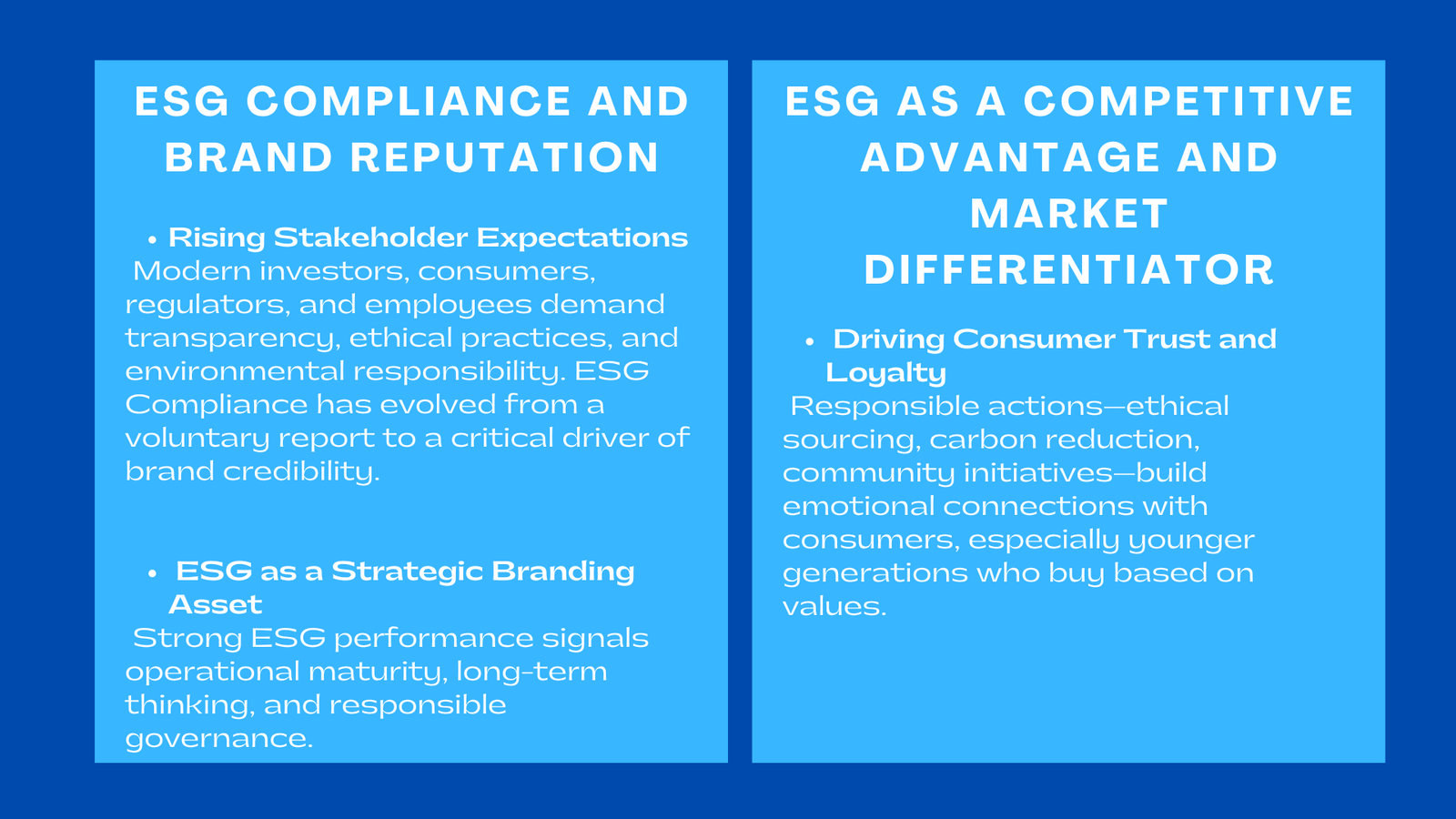
Today organizations are working in an environment where the stakeholders have quick access to the information and that they have the tools to assess the corporate behavior. The consumers desire ethical sourcing, fair working, and climate-responsible operations. ESG indicators are becoming more and more significant in risk assessment and resilience by investors. This change has made ESG compliance a source of trust and has drawn more explicit links between responsible operations and the brand reputation.
1.2 What is the ESG Credibility Reason behind the Perceived Brand Strength?
Good ESG performance is an indication of operational maturity, long-term thinking and responsible governance. Any brand that reports sustainability information on a regular basis, and responds to social issues, is more credible. This creates a reputation premium that other competitors who do not have a strong ESG framework can hardly imitate, making compliance a source of differentiation.
2. ESG Compliance as a Reputation Protection.
2.1 Proactive Governance as a Risk Management measure.
A company that implements the ESG structures at an early stage greatly minimizes the risk of being exposed to environmental infractions, employee conflicts, cyber attacks, and governance crises. These accidents have the ability to destroy the brand name immediately and forever. ESG compliance as such thus acts as a risk-buffering mechanism, shielding brands against high-impact controversies.
2.2. Improving the Confidence of Stakeholders.
It is through the reliability of the companies in terms of sustainability reporting, ethical behaviors, and open communication that stakeholders would love to associate with them. Companies with strong compliance mechanisms offer an assurance that their business operations are meant to be within the societal values, which gives an extra confidence in times of uncertainty in the market. Here, the role of ESG compliance brand value becomes particularly evident as compliance translates into measurable market perception.
3. ESG as a Catalyst for Consumer Trust and Loyalty
3.1, Building Emotional Connections Through Responsible Actions
Gives an explanation on how to establish an emotional bond with the customer, based on responsible actions. As customers value the brands more and more, loyalty to them is rewarded. Organizations resonate emotionally when they pledge to curb the carbon emission, community growth, or ethical supply chains. This type of connection which is based on values creates even greater loyalty, as it builds on a brand equity lasting longer than the product quality or price.
3.2 Reaching out to Conscious Buying Behaviors.
Research has always demonstrated that consumers particularly the young generations would rate brands based on their offerings but also based on the contribution to the society and the environment. The ESG compliance is one of the attributes that make purchase decisions, as it determines the market share, referral behavior, and customer retention.
4. The Communications Benefit of ESG Integration.
4.1 Ramping up Corporate Messaging.
Companies that plan to communicate ESG milestones develop stronger narratives. The usage of trusted data and outcome-based outcomes and third-party certifications strengthens the validity. It is easy to differentiate between the true commitment to ESG and false pretences by stakeholders, and that is why open communication is the key to improving the reputation.
4.2 Media and Public Relations: Strengthening.
Companies that have good ESG history have better media coverage. Their sustainability programs deliver continuous narratives that create a favorable publicity. This will assist the companies in sustaining reputational momentum, broader audiences, and dealing with negative narrative more decisively.
5. ESG Compliance as a Tool of attracting Investment.
5.1 Satisfying Investor Screening Requirements.
ESG assessments have become part of the due-diligence by institutional investors. Firms that had good ESG ratings are seen as less risky, more stable and better placed to increase sustainable returns. This places the ESG-compliant brands as investment choices in competitive markets.
5.2 Enhancing Long-term Valuation.
Increased brand reputation through ESG compliance will help in higher valuation in the long term. It is the determinant of high prices, attracting employees, positioning in the market and collaboration prospectus. The capability to showcase a reputation advantage that is enabled by compliance makes corporations more resilient to the ever-changing market cycles.
6. ESG differentiation as a way of Competitive Positioning.
6.1 The Making of Unambiguous points of superiority.
Successful ESG integration enables brands to be positioning themselves using quantifiable sustainability accomplishments. The distinction assists the organizations to compete in the market where features of products are not enough anymore. Brands that have led in responsible practices have reputational superiority which is attractive to both consumers and partners.
6.2 Strengthening Leadership in Accountable Markets.
Leadership companies in ESG campaigns put themselves in a proactive role of industry role models. This leadership gains allies, press coverage and regulatory favors. It also intensifies the reputational halo that is brought about by high compliance with ESG.
7. ESG in Singapore Branding Landscape.
7.1 Regional Standards and Regulatory Expectations.
Singapore has been branding itself a global centre of responsible finance and sustainability governance. Its regulatory regimes compel organizations to conform reporting arrangements to international standards. This renders ESG compliance as not only a requirement to operate in the region, but also a market expectation of remaining competitive.
7.2 Sustainability as the Branding Imperative.
Sustainability is becoming an important branding tool in the eyes of local companies. Organizations adopting a Sustainable branding strategy Singapore approach use ESG compliance as a foundation to craft regionally relevant brand messages that resonate with regulators, investors, and environmentally conscious consumers. This enhances their market credibility besides consolidating long term regional positioning.
8. The Impact of ESG on the Inner Culture and the reputation of the employees.
8.1 Improving workforce engagement
The use of high-quality, efficient, and cost-effective personnel management strategies can effectively enhance the organization’s human resources (Kothari, 2017).
Employees are attracted to those organizations that have responsible values. Internal policies that are correlated with ESG encourage participation, pride, and output. The employer brand is improved by the socially responsible culture, and these affect the quality of recruitment and retention.
8.2 Developing Leadership Behaviors that Help Build Reputation.
ESG models promote ethical leadership, transparency of decisions and responsible behavior. These organizational practices are what build up the perception that people have of them, building a reputation based on accountability and trust.
9. Benefits of ESG Integration in the Long-term Reputation.
9.1 Sustainable Obligations as Image Multiplier.
The reputational effect of ESG has a long-term effect. Companies that continually provide advancements in the reporting of sustainability, governance enhancement, and the community develop enduring trust. This protects the brand in times of crisis and increases the credibility in positive cycles.
9.3 Balancing Purpose, Performance and Public Perception.
In a situation where ESG commitments meet the strategic goals, brand reputation turns out to be a mirror image of organizational purpose. Such harmonization fortifies identity and enhances bonds with any of the stakeholder groups.
Conclusion: ESG as a Fundamental Brand Reputation.
ESG compliance is no longer a voluntary initiative that becomes a strategic need that defines corporate identity, confidence of stakeholders, and brand value over the long term. By instituting ESG principles into their activities and communication, organizations open the door of reputational advantages that go way beyond regulatory contentment. Through perception-formation, credibility building and reinforcing brand resiliency, ESG compliance prepares companies to succeed on sustainable and reputation-based foundation in facing the ever-growing competitive markets across the world.