Building Brand Influence Through Marketing and Communication
Influence is the powerful force that transforms awareness into action. It is what compels customers to choose one brand over another, shaping perceptions, driving preferences, and ultimately determining success in today’s competitive marketplace. Building lasting brand influence requires more than a strong product or flashy campaign — it demands credibility, consistency, and creativity in every aspect of marketing and communication.
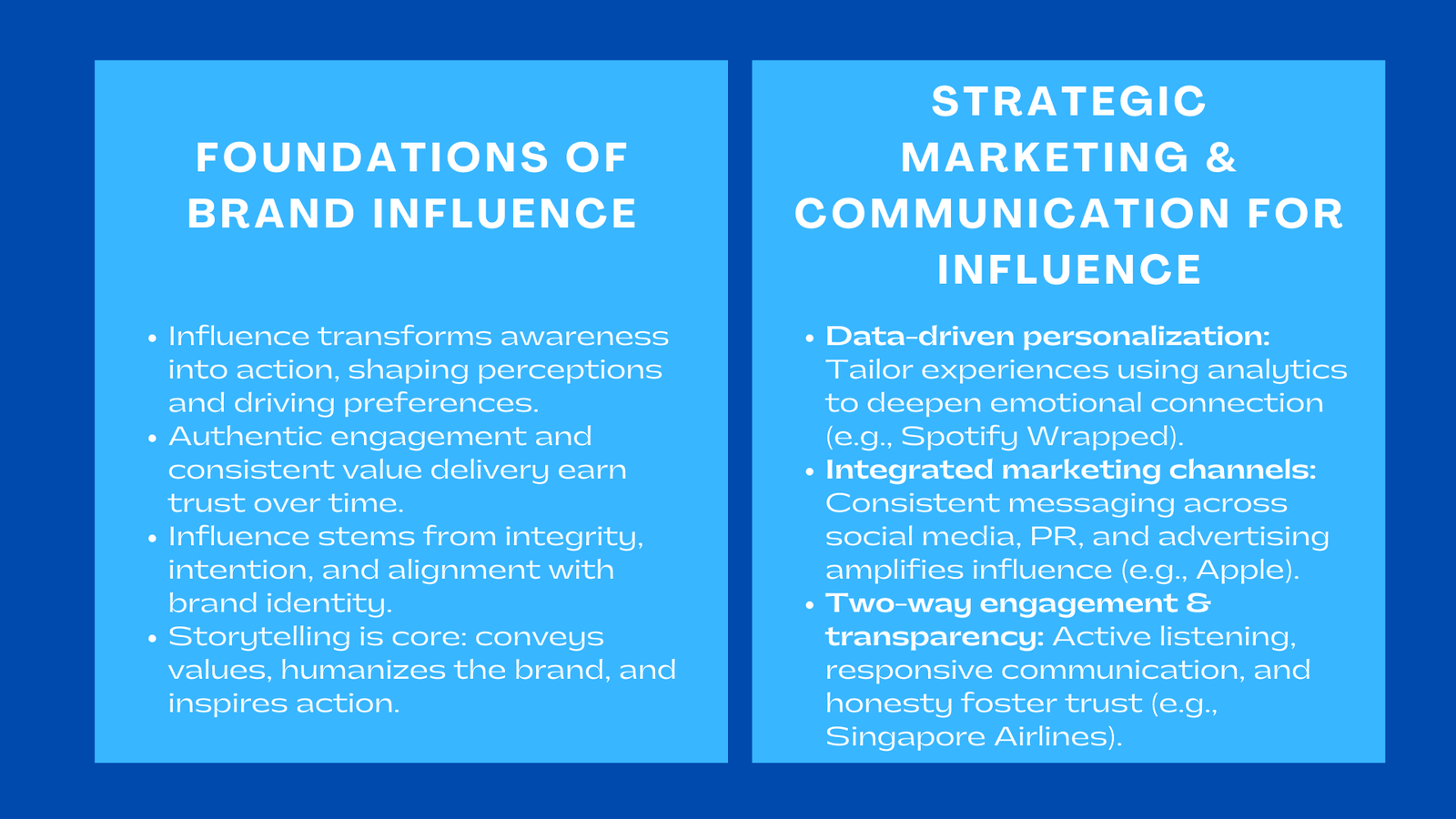
In the modern digital economy, influence doesn’t occur overnight. It is earned through the steady accumulation of trust, emotional resonance, and meaningful interaction. True brand influence grows out of authentic engagement and the consistent delivery of value that aligns with the audience’s needs, beliefs, and aspirations. When consumers feel that a brand truly understands them, speaks their language, and delivers on its promises, they begin to form a connection that transcends mere transactions.
However, influence is not simply about visibility or persuasion; it’s about authentic connection. In the digital age, where audiences are constantly bombarded with competing messages, the most influential brands are those that stand for something clear, communicate it with purpose, and live by it consistently. Influence stems from integrity and intention— the ability to stay true to a brand’s identity while adapting to the ever-changing expectations of consumers.
Brands that master how to build long-term brand influence through authenticity and communication become more than just market players — they become opinion leaders, cultural symbols, and trusted partners in consumers’ lives. Influence, therefore, is not merely how to build long-term brand influence through authenticity and communication about driving conversions; it’s about shaping mindsets, inspiring loyalty, and embedding a brand into the emotional fabric of society.
Crafting Strategic Marketing for Influence
Storytelling as the Core of Brand Advocacy
Successful brand advocacy begins with a compelling story — one that captures the brand’s essence and speaks directly to the audience’s aspirations. Storytelling is the foundation upon which influence is built. It’s how brands humanize themselves, convey their values, and make complex ideas relatable. When executed effectively, storytelling transforms brand messages into meaningful narratives that inspire action, just as understanding how to value a lead generation business in Singapore requires careful analysis, insight, and the ability to translate complex metrics into clear, actionable guidance.
Every piece of content — from social media posts to advertising campaigns — should serve a purpose and connect emotionally with the audience. Purpose-driven storytelling not only communicates information but also evokes empathy, trust, and admiration. For instance, Nike’s “Just Do It” campaigns are not merely about athletic wear; they embody resilience, self-belief, and empowerment. This emotional universality makes Nike not just a brand but a global movement.
Similarly, in Singapore, DBS Bank has successfully built influence by positioning itself as the “Bank of the Future.” Through a mix of storytelling and innovation, DBS communicates values of trust, sustainability, and customer-centric progress. Their campaigns showcase real stories of customers and communities, turning marketing into authentic advocacy.
Leveraging Data-Driven Marketing and Personalization
In today’s competitive digital landscape, data-driven marketing plays a pivotal role in establishing brand influence. Modern consumers expect personalized experiences that reflect their preferences and lifestyles. Through analytics, brands can understand customer behavior, predict trends, and design targeted messages that resonate on an individual level.
Data allows marketers to determine not just what audiences want, but why they want it. This insight enables the creation of campaigns that feel intuitive, relevant, and human. By integrating behavioral data with creative storytelling, companies can turn passive audiences into engaged participants. For example, Spotify’s annual “Wrapped” campaign transforms user data into personalized storytelling, celebrating customers’ unique music tastes. This approach deepens emotional connection and reinforces loyalty through personalization.
For Singaporean brands, data-driven marketing also helps ensure relevance across diverse cultural and linguistic segments. Whether targeting young professionals, families, or Gen Z consumers, brands that adapt messaging using insights from audience analytics enjoy stronger engagement and longer-lasting influence.
Integrating Marketing Channels for Consistency
Social media, websites, public relations, and events are all critical components of a brand’s marketing ecosystem. However, influence thrives only when these channels deliver a unified message. A fragmented brand voice confuses audiences, while consistent communication builds recognition and trust.
Integrated marketing ensures that whether a customer reads a press article, sees an ad, or interacts on social media, the message remains cohesive and familiar. Each touchpoint reinforces the brand’s identity and values, making the overall experience seamless. For example, Apple maintains strict alignment across all platforms — its stores, ads, and website all reflect simplicity, innovation, and premium quality. This harmony amplifies influence, ensuring that Apple’s voice remains unmistakable.
By synchronizing digital and traditional marketing channels, companies create a network of credibility — a system where every campaign builds upon the previous one to strengthen recognition and influence.
The Role of Communication in Building Trust
Two-Way Engagement and Responsiveness
Effective communication lies at the heart of influence. It is not about broadcasting messages but about building relationships. Two-way engagement — through social media interaction, community involvement, and responsive customer service — enables brands to listen actively and respond meaningfully. When consumers feel heard and respected, their emotional investment in the brand deepens.
For example, Singapore Airlines consistently engages with customers through personalized digital communication and prompt service recovery. Their reputation for empathy and attentiveness is not built on marketing slogans but on real, human-centered interaction. This responsiveness reinforces trust, making customers feel valued and understood.
Internal Communication: Aligning Employees with Brand Values
Internal communication is just as crucial as external engagement. Employees are the first ambassadors of a brand — their words, actions, and attitudes directly shape customer perception. When a company’s internal culture aligns with its external promises, authenticity follows naturally.
A brand with a strong internal alignment ensures that its people genuinely believe in what they represent. This belief radiates outward, turning staff into storytellers and advocates. Companies like Google and Unilever emphasize open communication and employee empowerment, fostering a culture where innovation and trust thrive. The more employees embody brand values, the more consistent and credible the brand’s external influence becomes.
Transparency and Authenticity in Communication
Transparency is the foundation of lasting influence. In an age where consumers have access to instant information, honesty and openness are non-negotiable. Brands that communicate with integrity — acknowledging shortcomings, explaining decisions, and maintaining openness — cultivate lasting credibility.
Crisis communication, for example, offers brands the opportunity to demonstrate authenticity under pressure. When handled with empathy and honesty, even negative events can strengthen trust. Johnson & Johnson’s response to the Tylenol crisis remains a benchmark: instead of hiding the issue, the company took full responsibility, acted swiftly, and communicated clearly — earning public respect and long-term loyalty.
Transparency must extend beyond crises to everyday operations. Brands that share their sustainability goals, ethical sourcing practices, and social impact initiatives show consumers that they stand for more than profit. This level of accountability transforms communication into trust capital.
Building Emotional Resonance Through Creative Marketing
The Synergy Between Marketing and Communication
Influence flourishes when marketing evokes emotion. Consumers remember how a brand makes them feel long after they forget what it said. Emotional marketing humanizes brands, making them relatable and memorable.
Brands can harness emotional storytelling through visual campaigns, user-generated content, or social causes that align with shared values. For example, Coca-Cola’s global “Share a Coke” campaign tapped into personalization and joy — allowing customers to find their names on bottles and share them with friends. This simple yet powerful campaign sparked emotional engagement and boosted global sales while reinforcing the brand’s identity as a symbol of happiness and connection.
In Singapore, brands like Grab have effectively used emotional marketing to highlight their role in people’s daily lives — from supporting small businesses to celebrating local culture. By embedding emotion into their messaging, these brands transcend transactional relationships and become part of their customers’ stories.
Marketing and communication are two sides of the same coin — one drives visibility, while the other nurtures trust. Marketing captures attention; communication sustains it. The synergy between both determines how deeply a brand can influence perception and behavior.
When marketing is backed by strong communication, every campaign feels authentic and coherent. Conversely, when communication lacks strategy or empathy, even the most creative marketing loses credibility. The world’s most successful brands excel at this balance — combining persuasive storytelling with transparent, two-way engagement to create influence that feels both powerful and personal.
Measuring Brand Influence
To manage and strengthen influence, brands must measure it. Tracking engagement metrics, sentiment analysis, media visibility, and brand recall helps evaluate whether influence efforts are resonating. Social listening tools, customer surveys, and analytics platforms provide valuable data that translate perception into measurable insights.
For example, monitoring Share of Voice (SOV) and Engagement Rate can show whether your brand leads industry conversations. Meanwhile, Net Promoter Score (NPS) indicates customer loyalty and advocacy — key signs of sustained influence. These metrics help brands refine messaging, allocate resources effectively, and adapt to audience feedback in real time.
The most influential brands continuously assess their communication impact, ensuring that their influence remains strong, ethical, and relevant.
Conclusion
The impact of brand influence is the result of long-term authenticity, creativity, and strategic communication. It helps businesses shape perception, foster loyalty, and inspire meaningful decision-making. True influence is not about dominating conversation but about earning trust. It transforms visibility into credibility and persuasion into emotional connection.
Brands that communicate clearly, empathetically, and purposefully create advocates — not just customers. These advocates amplify the brand’s message, extend its reach, and reinforce its credibility across diverse audiences. Influence, in its truest form, represents a bond between a brand and its audience — one built on shared values, consistent delivery, and transparent communication.
In today’s fast-paced digital world, where attention is fragmented and competition is relentless, influence stands as a measure of a brand’s strength, integrity, and staying power. The most successful brands are not those that shout the loudest, but those that speak with sincerity, act with purpose, and listen with intent.
Ultimately, strategic storytelling and data-driven marketing for brand advocacy — it cannot be bought, only earned. And for brands that master this balance between strategy and authenticity, influence becomes their greatest asset — transforming every interaction into connection, every message into meaning, and every loyal customer into a lifelong advocate.