Brand Value as Strategic Business Asset

Brand Value as Strategic Business Asset

Introduction to Brand Value as Strategic Business Asset

Brand value is no longer an intangible marketing theory in the modern competitive markets, but has become a measurable strategic asset, with direct effect on revenue and customer retention, investor confidence and the value to the enterprise over the long term. Firms in all sectors are realizing that good brands will fetch higher prices, their acquisition is cheaper and they will not be vulnerable during season of economic uncertainties. Due to the high competition and the fact that intangible assets are taking over corporate balance sheets, the value of a brand is no longer a choice but a requirement by corporate executives, investors and valuation professionals.

This essay is a business-oriented discussion of brand value, which elaborates on what brand value is, what is its measurement, and why is it important in corporate strategy, financial reporting, and talent development. It also examines the increased importance of brand valuation jobs, gives some useful examples of brand value statements, and how companies can realize brand strength into economic benefit that is sustainable.
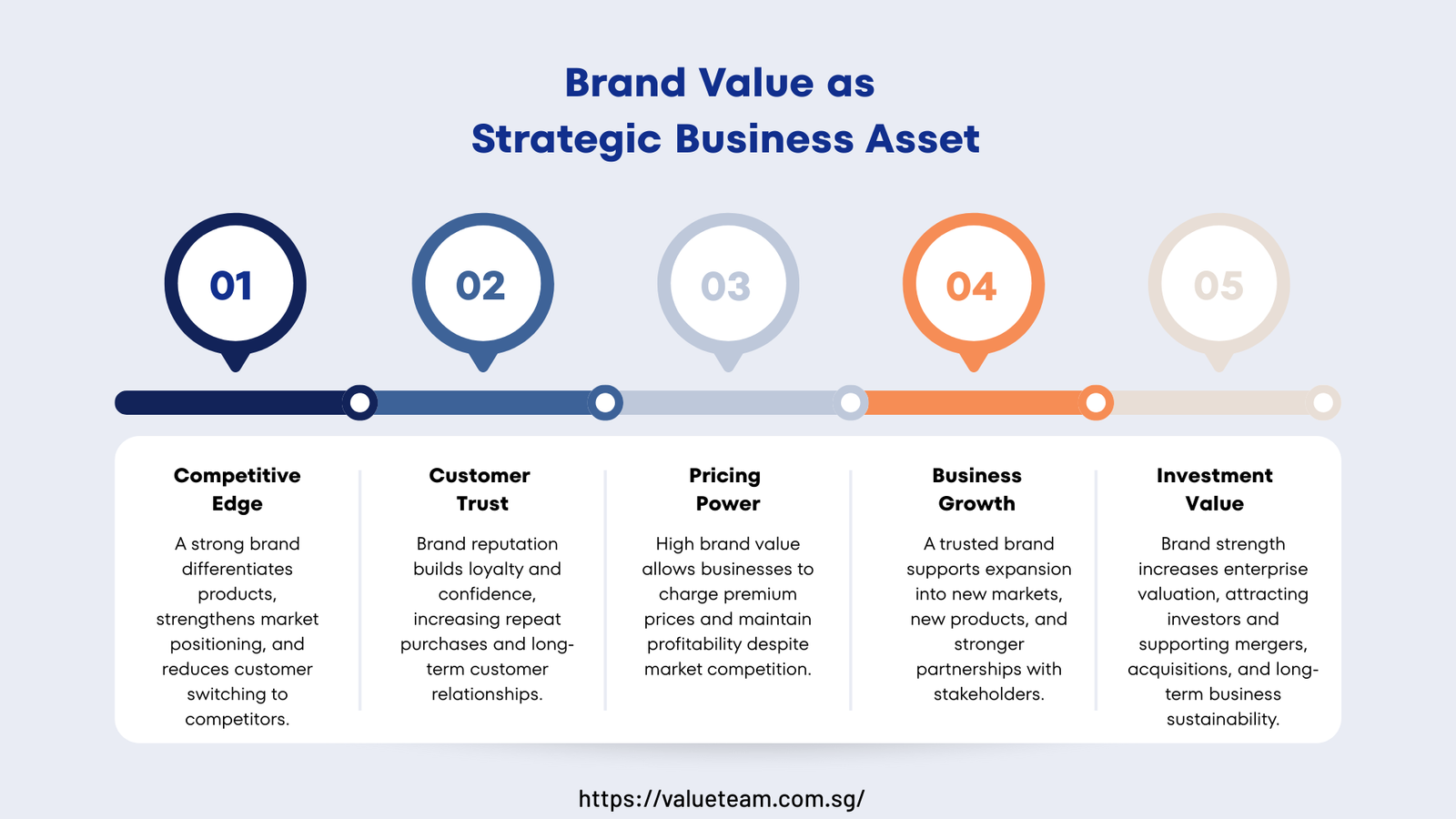


Brand Value as Strategic Business Asset

The Question What Is Brand Value?

Fundamentally, brand value is

refers to the monetary worth quantifiable of a brand name, reputation, perception, and emotional attachment to the stakeholders. It is the incremental cash flows of a branded product or company in comparison to an unbranded or unknown alternative. The brand value, unlike physical assets, is anchored on the consumer trust, recognition, and preference, and is thus, powerful as well as difficult to measure.

Strategically, brand value comes as an end result of a sustained brand positioning, excellent customer service, product quality, and efficient communication in the long run. It is a very important intangible asset financially that has the potential to impact the valuation of the enterprise, merger results, and the capital markets positively. The study of brand value is hence an interdisciplinary subject incorporating marketing, finance, strategy and governance.

Brand Value as a Strategic Importance in Business

Brand value is one of the major differentiators in business in the contemporary business landscape. With products and services being commoditized more, the brand may be the key determinant of customer selection. Power of having strong brands helps companies to dictate prices, influence positive distribution conditions, and ensure customer loyalty to the company even in the wake of stiff competition.

Along with differentiation, brand value isalso associated with risk mitigation. Companies that have a strong brand equity usually come back to their feet faster following reputational issues, business destabilization, or economic diversions. As an investor, branded business is deemed to be more predictable and stable and thus more cost of capital will be low and higher market valuations.

Brand value at the organizational level helps in internal and external brand promise alignment. Employees that associate with a strong brand are more likely to be engaged, productive and committed boosting brand strength in the long term.

Financial View: Brand Value Measures

Valuation wise, brand value can be determined using well established financial tools that approximate the economic advantages that can be ascribed to brand ownership. Popular strategies are income based strategies, market-based comparisons, and cost-based analysis where income based strategies are the most acceptable strategies in strategic and financial reporting.

Income based models estimate value of brand is through the projection of future cash flows related to the brand and discounting them to present value to reflect the current performance as well as future expectations of growth. The approaches of the market place deduce value based on similar transactions of the brand whereas the cost-based methods approximate the investment necessary to reproduce the brand.

Knowledge of the determination of brand value is fundamental towards compliance with standard accounting policies, auditing requirements, and regulatory examination especially in the case of financial reports and transactions.

There are several factors that influence the value of the brand in case of a merger, acquisition, or even investment decision

Brand value is a major force in purchase price dispensation and acquisition bargaining in mergers and acquisitions. Acquirers often pay huge premium prices to well-established brands because they bring about sustainable cash flows. When there is a poor evaluation of brand value, an overpayment is likely to occur, risks of impairment, and difficulties experienced in integrating the two companies post-acquisition.

To investors, brand value is one of the major measures of the long-term competitiveness and the sustainability of earnings. Strong brands tend to have a greater customer lifetime value and reduced volatility of revenues and are therefore good investment prospects. This has made brand valuation a fundamental element of investment analysis, due diligence of a private equity and restructuring of a corporation.

The Increasing Significance of Brand Valuation Jobs

The advent of intangible assets and brand valuation has become a popular specialty and high-paying position in finance, consulting, and corporate strategy. Brand valuation professionals have a role of determining brand strength, modeling economic benefits and making strategic decisions pertaining to branding investments and transactions.

Multidisciplinary skill set of financial modeling skills, strategic analysis and consumer behavior insight are demanded in these roles. The emergence of brand valuation positions is also a sign of more regulatory and investor requirements of transparency and rigor in the valuation of intangible assets.

Brand valuation jobs are becoming perceived as a strategic role, with a high impact on long-term corporate performance and capital allocation by organizations that are becoming more focused on brand-driven value creation.

Brand Valuation Careers Skills and Competencies

Individuals seeking employment in brand valuation fields have to possess excellent analytical skills especially in the areas of financial forecaster as well as discounted cash flow. No less significant is the quality of being able to convert qualitative aspects of brand to quantitative assumptions that can be audited or regulatively scrutinized.

Besides, high achievers in the brand valuation careers need to be knowledgeable in the dynamics of the industry, competitive positioning, and market trends, and also have the skills of conveying the valuation findings effectively to the senior management and the outside parties.

Brand Value Statements and Organizational Alignment

In addition to valuation, brand value is defined by the way organizations define and incorporate brand purpose to an internally-oriented organization. The clear brand value statement can be called a strategic anchor that helps to unite all workers around a common vision and make decisions throughout the organization.Good examples of brand value statements are able to articulate what the brand to be represents, what value the brand will offer to its customers, and what values the corporation will act upon. These declarations assist in the conversion of abstract brand ide

Real-life Brand Value Statement Examples

Well written brand value statements are very short, genuine, and consistent with corporate strategy. Not only do they explain what is on offer by the company, but why it is important to the customers and society. Although the brand value statement examples differ in various industries, they are usually focused on the points of trust, innovation, customer-centricity, and long-term impact.

The organizations that periodically consider and revise brand value statement examples are in a better position to adjust to changes in the market, with brand consistency and credibility.

Governance, Risk, and Future Trends

Governance wise, brand value is a strategic asset that needs management on board and executive level. Brand value can be easily destroyed by reputational risks, lack of consistent messaging and wrong incentives when not well managed.

In the future, brand value will likely contribute even more to the corporate valuation with the intangible assets gaining more and more priority over the tangible ones. The increase in analytics and valuation methodology as well as integration in ESG is increasing the accuracy and relevance of brand valuation practices.

Conclusion

Brand value is an essential factor of corporate success in contemporary intangible-based economy which affects financial performance, strategic resilience and trust of stakeholders. The clear explanation of the concept of brand value, its measurement, and its governance will make organizations attain sustainable competitive advantage.

The rise in the number of jobs based on brand valuation reveals an increased necessity of professional skills in the process of the management and quantification of assets that are related to brands. In the meantime, the examples of the well made brand value statements give the strategic clarity needed to reconcile the internal culture with the external brand promise.

Individuals that view brand value as quantifiable, manageable, and strategic resource are in a better position to create long term growth and enterprise value in the ever-competitive global market.

Related Posts

Everything You Need to Know About Brand Valuation with Valueteam

Valueteam helps businesses unlock the true value of their brand for growth, fundraising, or M&A. Our expert brand valuation services deliver clarity, precision, and confidence.