Strategic Brand Valuation for Startups and SMEs
Brand valuation is increasingly recognized as a critical component of strategic management for startups and small-to-medium enterprises (SMEs). Unlike large multinational corporations, startups and SMEs often derive a substantial portion of their market potential and competitive advantage from intangible assets, particularly brand value. A strong brand can influence customer loyalty, attract investors, support pricing strategies, and provide leverage in partnerships or acquisition discussions.
For emerging businesses, understanding and implementing an effective SME brand valuation strategy is essential for both internal decision-making and external stakeholder confidence. Meanwhile, startup brand value planning enables early-stage companies to define their positioning, quantify their intangible assets, and communicate value clearly to investors, partners, and customers. Without a structured approach, startups and SMEs risk undervaluing their brand, missing opportunities for growth, or failing to secure necessary funding.
In today’s competitive and digitally connected marketplace, brand valuation is no longer a peripheral activity. For SMEs and startups, it is a strategic tool that informs growth planning, operational investment, and market positioning. Companies that systematically evaluate and plan brand value can create sustainable competitive advantages while mitigating risks associated with underestimating intangible assets.
Understanding the Importance of Brand Valuation for Startups and SMEs
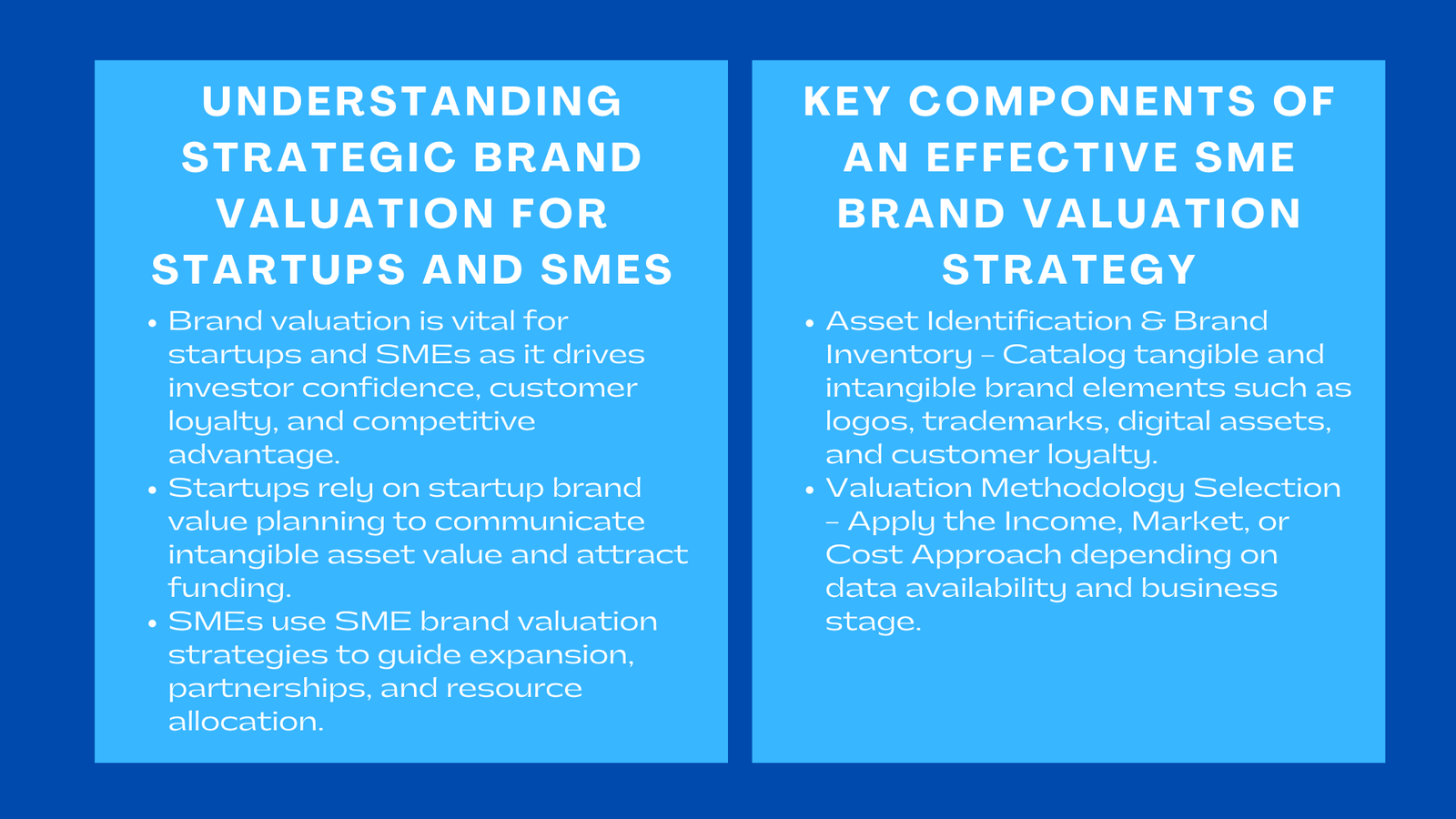
Brand valuation goes beyond measuring consumer recognition or reputation. For startups, it reflects the potential for market capture, scalability, and financial growth. For SMEs, it demonstrates operational maturity, market credibility, and long-term viability. Both types of organizations benefit from a structured valuation approach that quantifies brand contributions to revenue, customer retention, and market share. In this context, brand valuation Singapore for startups and SMEs provides a practical framework to assess and enhance brand-driven growth and investor confidence in a competitive market.
Startups, in particular, rely on intangible assets to attract seed funding, venture capital, or strategic partnerships. Investors often assess the brand’s ability to resonate with target audiences, generate loyalty, and create sustainable revenue streams. Without effective startup brand value planning, companies may fail to highlight their most valuable assets, resulting in undervaluation or missed funding opportunities.
For SMEs, brand valuation supports strategic decisions such as expansion into new markets, product diversification, and licensing agreements. An SME brand valuation strategy allows management to allocate resources efficiently, identify high-value business lines, and optimize brand positioning relative to competitors. By linking brand equity to measurable financial outcomes, SMEs can enhance credibility with banks, investors, and partners.
Key Components of an SME Brand Valuation Strategy
Asset Identification and Brand Inventory
A foundational step in SME brand valuation strategy is identifying all components of the brand. This includes tangible elements such as logos, trademarks, product packaging, and marketing collateral, as well as intangible assets such as customer loyalty, digital presence, reputation, and proprietary content. Maintaining a detailed brand inventory ensures that all assets contributing to brand equity are accounted for in valuation models.
For startups, this may also include intellectual property such as proprietary software, patented processes, or unique business models. Comprehensive asset identification provides clarity for both internal decision-making and external communication to investors or potential acquirers.
Selecting a Valuation Methodology
Several approaches exist for valuing brands, and selecting the appropriate methodology is a critical aspect of SME brand valuation strategy. The most widely used methods include the Income Approach, Market Approach, and Cost Approach.
The Income Approach estimates the future cash flows generated by the brand, discounted to present value. For a startup, this might involve projecting revenue from early adopters, subscription models, or product launches, while incorporating growth assumptions and market potential. The Market Approach uses comparable brand transactions or licensing agreements to benchmark value, which can be particularly useful for SMEs considering strategic partnerships or acquisition opportunities. The Cost Approach considers the investment required to recreate or replace the brand, providing a conservative measure of value, especially when historical revenue data is limited.
Data Collection and Validation
Reliable data is essential to support SME brand valuation strategy. Startups and SMEs should gather quantitative data, such as sales, revenue projections, customer acquisition costs, churn rates, and digital engagement metrics. Qualitative insights, including brand perception surveys, competitor analysis, and stakeholder feedback, also play a crucial role in understanding brand strength.
Validating data ensures credibility and defensibility, particularly when presenting valuations to investors or regulatory authorities. Cross-functional collaboration between finance, marketing, and operations teams is critical for accurate, holistic data integration.
Determining Brand Strength and Market Position
Brand strength is a key factor in valuation, reflecting the brand’s ability to generate future revenue and maintain loyalty in competitive markets. Startups can assess brand strength through metrics such as customer engagement, social media reach, referral rates, and early adoption patterns. SMEs can analyze market share, repeat purchase rates, and reputation relative to competitors.
Understanding the relative market position helps quantify the premium that the brand can command. A strong brand in a niche market or emerging segment may justify higher valuation multiples, whereas weaker brand recognition may necessitate investment in marketing, positioning, and customer experience improvements.
Scenario Planning and Sensitivity Analysis
Startups and SMEs face high levels of uncertainty, making scenario planning an essential component of brand value planning. Organizations should model best-case, base-case, and worst-case scenarios to assess how market changes, competition, or operational risks might affect brand value. Sensitivity analysis helps quantify the impact of changes in key assumptions, such as growth rates, customer retention, or pricing strategies.
For example, a tech startup projecting revenue from subscription-based services can simulate scenarios based on varying user acquisition costs, conversion rates, or competitor entry. This allows management to proactively adjust strategies, safeguard valuation, and strengthen investor confidence.
Integrating Brand Valuation into Strategic Decision-Making
Investment and Resource Allocation
An effective SME brand valuation strategy informs resource allocation decisions. By understanding which aspects of the brand generate the highest returns or contribute most to customer loyalty, management can prioritize marketing spend, product development, and digital initiatives.
Startups can use brand value planning to determine which campaigns or product features are likely to yield the highest impact, ensuring that limited resources are deployed effectively. SMEs can leverage valuation insights to optimize operations, streamline brand messaging, or invest in high-value distribution channels, supporting long-term growth.
Mergers, Acquisitions, and Partnerships
Brand valuation is often critical in M&A discussions or strategic partnerships. Accurately quantified brand value provides a defensible basis for negotiating purchase price allocation, licensing agreements, or equity investments. Startups seeking venture capital or SME owners considering exit strategies benefit from demonstrating transparent, well-supported brand valuations.
For instance, a Singapore-based SME in the FMCG sector may use brand valuation to negotiate licensing agreements with regional distributors, highlighting the tangible and intangible contributions of brand equity to projected revenue. Startups can leverage brand value planning to attract investors, secure funding, and communicate growth potential effectively.
Performance Monitoring and Continuous Improvement
Brand valuation should not be a one-time exercise. Regular monitoring ensures that brand performance aligns with strategic objectives and market expectations. Metrics such as customer satisfaction, digital engagement, repeat purchases, and NPS scores provide insight into brand health and future value.
Continuous assessment allows startups and SMEs to adjust marketing strategies, operational processes, and innovation initiatives proactively. By linking valuation results to performance monitoring, companies can maintain a strong brand trajectory, maximize enterprise value, and sustain competitive advantage.
Challenges in Startup and SME Brand Valuation
Limited Historical Data
Startups often lack extensive historical revenue or market data, making brand valuation inherently uncertain. Early-stage assumptions about adoption rates, pricing, and customer behavior require careful documentation, justification, and scenario planning to support credible valuation estimates.
Rapid Market Changes
SMEs operate in dynamic markets where consumer preferences, technological advances, and competitive pressures evolve quickly. Brand valuation models must remain flexible, updated regularly, and capable of accommodating new trends, disruptions, or unforeseen opportunities.
Intangible Nature of Brand Assets
Brands are inherently intangible, with value influenced by perception, reputation, and emotional connection. Quantifying these factors requires combining qualitative insights with financial modeling, ensuring that both tangible and intangible contributions are reflected in valuation results.
Integration Across Teams
Brand valuation requires collaboration between finance, marketing, operations, and leadership teams. Inadequate integration may lead to incomplete assessments, undervaluation, or misalignment with strategic objectives. Implementing standardized processes, clear communication channels, and cross-functional oversight ensures consistency and credibility.
Case Study: Singapore-Based Startup
A Singaporean tech startup developing a mobile productivity app undertook comprehensive startup brand value planning to attract venture capital funding. The company first identified its digital brand assets, including the app interface, proprietary algorithms, social media presence, and early adopter community.
Using the Income Approach, the team projected subscription revenues over five years, applying discount rates aligned with investor expectations. Market comparables of similar regional app acquisitions validated assumptions, while sensitivity analysis examined variations in user growth, engagement, and retention.
The results highlighted the brand’s potential value, demonstrating its capacity to generate revenue, attract strategic partnerships, and scale regionally. Transparent documentation and scenario planning enabled the startup to secure Series A funding while aligning internal teams around growth and monetization strategies.
Conclusion to Strategic Brand Valuation for Startups and SMEs
Strategic brand valuation is no longer optional for startups and SMEs. Implementing a structured SME brand valuation strategy or startup brand value planning process enables organizations to quantify intangible assets, guide investment decisions, and communicate value effectively to investors, partners, and stakeholders.
Key elements include asset identification, selecting appropriate valuation methodologies, collecting and validating reliable data, assessing brand strength, conducting scenario planning, and integrating insights into strategic decision-making. While challenges such as limited historical data, rapid market changes, and intangible factors exist, structured approaches provide clarity, credibility, and actionable intelligence.
Startups that execute effective brand value planning can attract investors, secure funding, and establish market presence, while SMEs using an SME brand valuation strategy can optimize resource allocation, strengthen operational resilience, and maximize enterprise value. By treating brand valuation as a strategic tool, emerging businesses in Singapore and beyond can enhance competitiveness, build sustainable growth, and leverage intangible assets as critical drivers of long-term success.