Certified Corporate Brand Audit Strategy
How a Brand Audit Can Improve Your Brand’s Market Value
Introduction to Certified Corporate Brand Audit Strategy
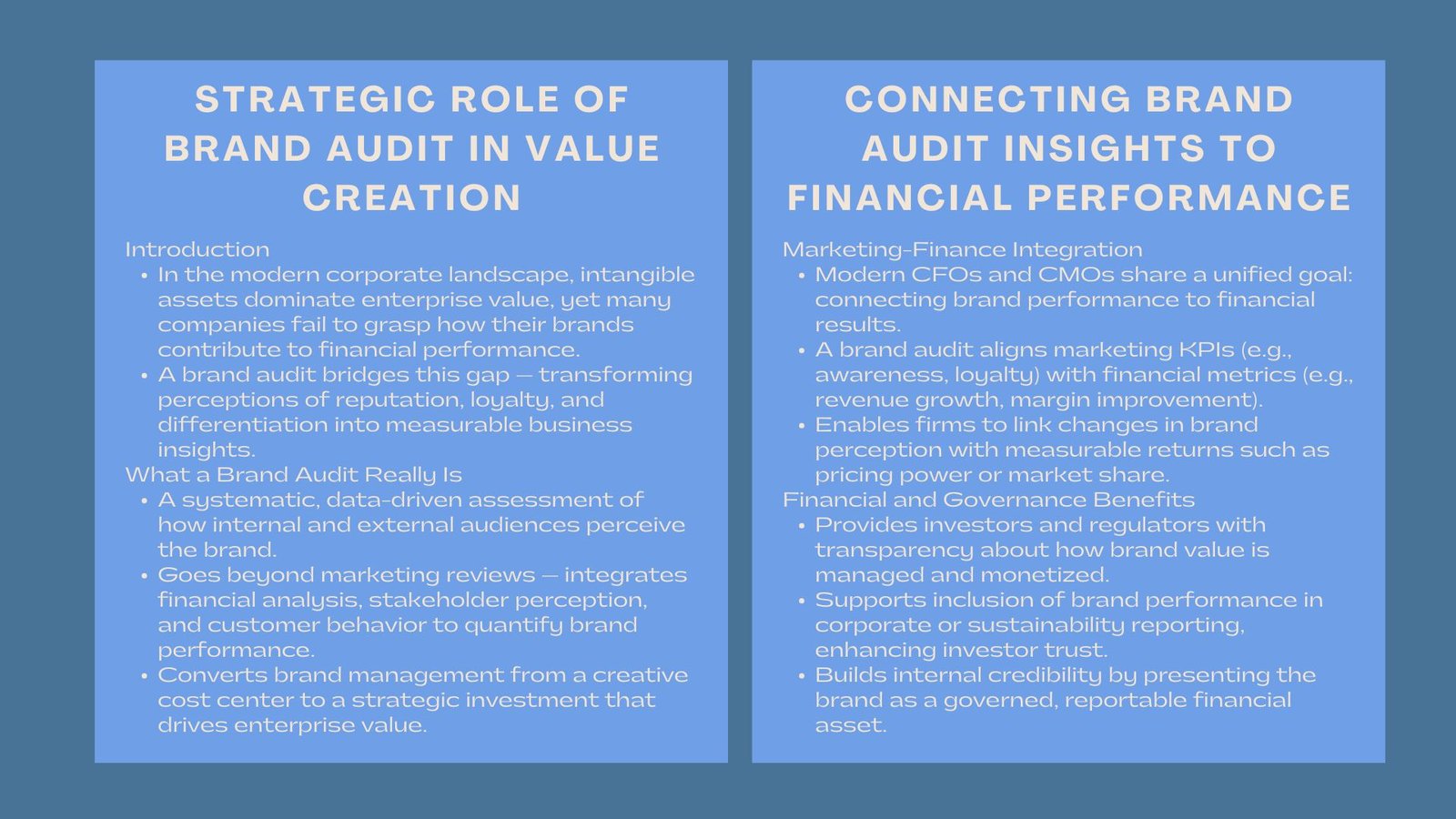
With the increasing number of companies having intangible assets on the corporate balance sheet, brand strength has become a marker of business performance. However, there is still a vast majority of organizations that find it difficult to comprehend the role of its brands in the general enterprise value. A thorough brand audit fills that gap. It converts intangible images of brand reputation, allegiance, and distinction into practical conclusions that have a direct impact on the financial results. A brand audit is never just a marketing activity, but rather an important financial instrument. The drivers of brand equity can be used to unlock the value creation opportunities, reduce risks, and align branding efforts with the long-term business objectives by the companies. A brand audit will be the source of long-term growth and competitiveness when performed in a systematic way.Strategic Brand Audit and its role in Value Creation.
Learning What an Audit of a brand is all about.
A brand audit is a systematic analysis of a brand perception of a company both at the internal and external environments. It looks at how the brand is positioned, its visual identity, the consistency of messages, customer feeling and differentiation. The target is not only to know what the brand is, but what kind of perception converts into the performance in the market. A brand audit is holistic unlike the traditional marketing review which is based on the creative execution. It combines financial data, customer analytics and stakeholder insights to quantify the efficacy of the brand to strategic purposes. This will help the executives to measure assets that are not tangible and calculate brand management as an investment rather than an expense.Making the Linkage between Marketing Insights and Financial Metrics.
The current CFO and CMO have a similar mandate, i.e., to ensure that the brand performance is associated with financial performance. Brand audit enables organizations to determine which activities can generate returns that are quantifiable. As an example, the variation in the market share or the pricing power can be linked to the change in the brand awareness or customer loyalty. The combination of financial performance, customer satisfaction, and the brand sentiment data can help the decision-makers relate marketing KPIs with the enterprise value creation. This congruence transforms branding as a communications activity to a strategic growth driver.Enhancing Government-wide Power and Investor Trust.
The need to have complete transparency on how companies use intangible assets has been increasing among investors. A brand audit gives a governance level of report on brand performance and exposure risk. It also allows the shareholders to know that the brand which is usually one of the biggest unrecognized assets of the firm is being operated with discipline and responsibility. Once combined with financial reporting disclosure or sustainability disclosure, the audit enhances credibility, which assists organizations to be able to communicate the worth of their brand within the context of their entire enterprise.The Effective Brand Audit.
Scope and Objectives Definitions.
Leadership needs to explain the objective of the audit before the start of the data collection. Is it in the process of a merger, going into a new market or repositioning? The objectives determine the scope of the audit process, namely, whether the audit is concentrated on analyzing the reputation, evaluating portfolios, or measuring the equities. The targeted approach will make the findings not only descriptive but also practical. It also enables inter-functional teams like finance to marketing to understand the outcomes in a similar decisionable fashion.Collecting Quantitative and Qualitative Information.
Good audit involves a combination of both hard and human data. Quantitative indicators can be market share, sales development, and customer acquisition expenses, whereas qualitative research studies brand affiliation, emotional engagement, and trust. These viewpoints as a group form a 360 perspective of brand performance. For corporates adopting the brand audit and valuation process for Singapore enterprises, data collection should follow recognized international standards such as ISO 10668. This ensures comparability across markets and provides a defensible foundation for future valuation exercises or investor reporting.Benchmarking Against Industry and Competitors
To gauge true performance, brand strength must be evaluated in context. Benchmarking against peers reveals how effectively your brand differentiates itself and identifies untapped opportunities. A brand that consistently outperforms competitors in awareness, loyalty, and perceived quality typically commands higher price premiums and shareholder confidence. Benchmarking also highlights weaknesses early, allowing proactive intervention before market share erosion occurs.Linking Brand Audit Insights to Financial Value
Translating Brand Health into Monetary Terms
Once audit findings are compiled, the next challenge is converting insights into financial impact. This is where brand valuation methodologies come in. By linking brand perception metrics to revenue drivers and cost efficiencies, organizations can estimate how brand strength influences enterprise value. Incorporating the comprehensive brand equity evaluation and reporting model Singapore allows companies to translate intangible brand attributes into concrete financial outcomes—such as increased cash flow stability, reduced risk premiums, and enhanced investor sentiment. This is the quantitative intermediary between brand performance and corporate worth that makes an audit a marketing review a financial tool.Determining Growth and Optimization Opportunities.
Audits of the brand will often identify areas where the strategic refinement can be done to unlock hidden value. As an illustration, differences in messaging between different regions can erode brand equity, and underexploited sub-brands can be sources of future growth. By responding to these insights companies are able to focus on those initiatives which have the greatest value contribution- be it a rebranding, product focus and market focus. This process builds brand equity with time; this is a direct contribution to long-term enterprise value.Empowering Data-driven decision-making.
Brand audit institutionalizes interdepartmental learning. They offer common foundation of facts to the executives to make informed decisions regarding marketing budgets, portfolio strategy and capital investment. Frequent audits would help the companies to keep track of the progress and gauge ROI of brand initiatives so that resources can be dedicated to areas where they are likely to create the most value.Leaders can make the Strategic Benefits of Brand Audits as much as possible.
Making M & A Ready and Valuation Credible.
Brand audits increase credibility on valuation among companies that expect a merger, acquisition or strategic alliance. They give empirical evidence on brand strength, customer loyalty and growth potential- which can greatly determine deal terms. With a strong brand audit report and a defensible valuation model, negotiating strength is added and fair treatment of intangible assets is guaranteed during the transaction process.Creating Brand Purpose Organizational Alignment.
A brand audit also brings the various stakeholders to a common ground regarding the meaning of the brand and its value creation. It makes the internal inconsistencies clear, purpose reinforced and corporate culture stronger. The result is an increase in employee engagement, operational focus and eventually brand performance in the market place.Brand Future Proofing to the Market.
The markets change rapidly, and brands that do not adjust to the changes run the risk of becoming irrelevant. Periodic audits assist organizations to foresee consumer preference changes, technology and regulation. This vision enables preemptive adjustment, be it the innovation of the product or the sustainability of the brand or the digital transformation itself, so that the brand equity can still increase in a constantly changing environment.Conclusion
A brand audit is not an impression of a point in time- it is a value-building plan. Through effective review of brand performance and optimization of it to financial results, companies can be more resilient, investor-confident, and increase in long-term enterprise value. With robust data and best practice in the world, the brand audit can serve as a foundation of corporate strategy–the strength that transforms the intangible to the measurable and the long term. Organisations that invest in knowing their brand in the current age are in a better position to gain maximum market value tomorrow.Frequently Asked Questions
Q1. What is a corporate brand audit?
A corporate brand audit is a comprehensive evaluation of a company’s brand performance, positioning, reputation, messaging, customer perception, and market presence. It helps organizations assess whether their brand strategy aligns with business objectives and identifies opportunities to strengthen brand equity and competitive advantage.
Q2. Who should attend a Corporate Brand Audit Strategy certification program?
This certification program is suitable for business owners, corporate executives, brand managers, marketing professionals, consultants, finance professionals, and strategic planners who want to understand how brand audits can support business growth, risk management, and long-term value creation.
Q3. What areas are typically evaluated during a brand audit?
A corporate brand audit generally examines brand positioning, customer perception, brand messaging, visual identity, market reputation, competitive positioning, internal brand alignment, customer experience, and financial performance indicators. The objective is to identify strengths, weaknesses, risks, and opportunities for improvement.
Q4. How can a corporate brand audit support business strategy?
A brand audit provides data-driven insights that help organizations refine their market positioning, improve customer engagement, strengthen brand consistency, allocate resources more effectively, and align branding initiatives with broader business objectives. The findings can guide strategic planning and support sustainable growth.
Q5. What are the benefits of learning corporate brand audit strategies?
Understanding corporate brand audit methodologies enables professionals to evaluate brand performance more effectively, identify value drivers, improve stakeholder confidence, and develop actionable recommendations that enhance brand strength. These skills are valuable for organizations seeking to maximize brand value, improve competitiveness, and support long-term business success.